
A San Diego e-bike injury claim 2026 case can become more complicated than many people expect. E-bikes now appear near schools, beaches, shopping centers, college areas, downtown streets, and residential neighborhoods. They help people move faster and avoid parking problems. They also create new risks when riders, drivers, and pedestrians share tight spaces.
Recent San Diego reports have placed e-bike safety back in the spotlight. More riders now use e-bikes for school, work, errands, beach trips, and short local travel. At the same time, more crashes involve riders, cars, pedestrians, and minors. These crashes can raise serious legal questions.
An injured person may need to look at traffic laws, rider age, bike class, helmet use, insurance coverage, road design, and product defects. Parents may also need answers when a child suffers injuries or causes harm. This guide explains what riders, parents, pedestrians, and drivers should know after an e-bike crash in San Diego.
Why San Diego E-Bike Injury Claims Are Becoming A Bigger Issue
E-bikes are not ordinary bicycles with a small motor. Some models travel fast enough to cause severe injuries. That risk grows when riders move near cars, driveways, parked vehicles, crosswalks, sidewalks, and uneven roads.
A rider may think they have enough time to stop. Speed can change that quickly. Heavier bikes also need more distance to slow down. A driver may not expect a rider to arrive so fast. A pedestrian may step forward without noticing an approaching e-bike.
San Diego continues to focus on street safety, speed control, and safer roads. That matters because many e-bike crashes happen in busy areas. Bike lanes may suddenly end. Cars may turn across a rider’s path. A driver may open a door into traffic. A teen rider may move too fast through a crowded zone.
After a crash, fault rarely comes from one simple fact. Insurance companies may argue about speed, visibility, right of way, and rider behavior. The injured person needs strong evidence to tell the full story.
New safety rules can affect how fault is reviewed
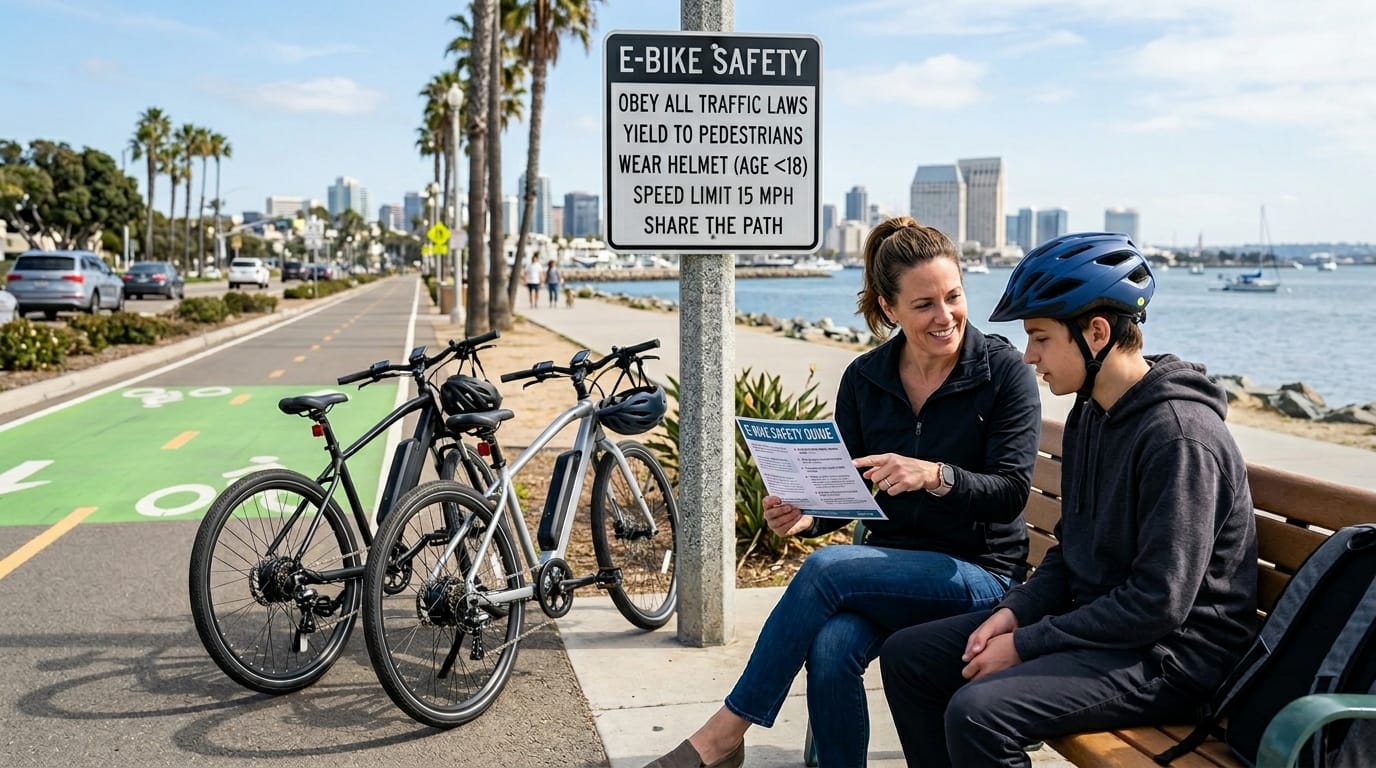
California and local agencies continue to update e-bike safety guidance. The City of San Diego explains e-bike classes, speed limits, age rules, and helmet requirements. It also warns riders about sidewalk use and pedestrian-only areas. You can review the official guidance here: City of San Diego E-Bike Laws & Safety Tips.
These rules matter after a crash. Insurance adjusters search for facts that can reduce a claim. They may question whether the rider used the correct lane. They may also check speed, helmet use, age, and the bike’s class.
If a rider ignored a stop sign, rode against traffic, or used a sidewalk illegally, the insurer may blame the rider. That does not always end the case. A careless driver, unsafe property owner, or defective product may still share responsibility.
Class, speed, and modification issues matter
One key issue in a San Diego e-bike injury claim 2026 case is the bike itself. Some devices look like e-bikes but act more like electric motorcycles. Other riders modify legal e-bikes to exceed safe speed limits.
That difference can affect liability and insurance coverage. It can also affect whether the rider had the legal right to use the device in that place.
Investigators may ask who modified the bike. They may also check who sold it, repaired it, or allowed the rider to use it. If the rider is a minor, parents may face questions too. For more information, read Teen E-Bike Accidents in San Diego.
Pedestrians can suffer serious injuries too
E-bike crashes do not only hurt riders. Pedestrians can suffer major injuries when an e-bike hits them. These crashes may happen in crosswalks, parking lots, sidewalks, boardwalks, campuses, and business districts.
Older adults, children, and people with mobility issues face higher risks. A fast impact can cause broken bones, head injuries, hip injuries, back injuries, and emotional trauma.
In pedestrian cases, the details matter. The claim may depend on the rider’s speed, location, and direction of travel. Witnesses may also help explain who had the right of way.
A rider may say the pedestrian stepped out suddenly. The pedestrian may say the rider moved too fast or entered a pedestrian area. Photos, videos, and witness statements can help settle that dispute.
Drivers may still be responsible for e-bike crashes
Drivers sometimes blame e-bike riders right away. They may say the rider appeared too quickly. They may also claim the rider moved unpredictably. Those arguments do not always hold up.
Many crashes happen because a driver acts carelessly. A driver may fail to yield, turn across a bike lane, speed through an intersection, or drift into the rider’s path. A parked driver may also open a door without checking for traffic.
Distracted driving can make these cases stronger. A driver using a phone, GPS app, music screen, delivery app, or rideshare app may miss a visible rider. If phone use played a role, the injured person should act quickly. Digital evidence can disappear fast. For more detail, see Distracted Driving Accidents in San Diego.
Intersection design and speed limits can support the claim
Some e-bike crashes involve more than one problem. A driver may act carelessly. The road design may also create extra danger.
Poor visibility, faded lane markings, blocked sight lines, confusing signs, and unsafe speeds can all affect a crash. A bike lane may end without warning. A crosswalk may lack clear markings. A turn lane may place drivers and riders in conflict.
Street-safety data does not prove fault by itself. However, it can help show why a location required extra care. If a crash happened in a known high-risk area, an attorney may review prior crashes, lighting, speed signs, bike lanes, and road layout.
For more on this issue, read San Diego Speed-Limit Changes and Intersection Injury Claims in 2026.
What To Do After A San Diego E-Bike Crash
The first step after a serious e-bike crash is medical care. Even a minor injury can worsen later. Head injuries, concussions, fractures, internal injuries, dental trauma, nerve pain, and soft tissue injuries may not show clearly at first.
Medical records also connect the injury to the crash. That connection can help protect the claim. Waiting too long gives insurance companies room to argue.
After medical needs, evidence becomes the next priority. E-bike cases often turn into arguments about speed, lane position, visibility, helmet use, and right of way. A person who gathers evidence early has a stronger chance to prove what happened.
Important evidence to preserve early
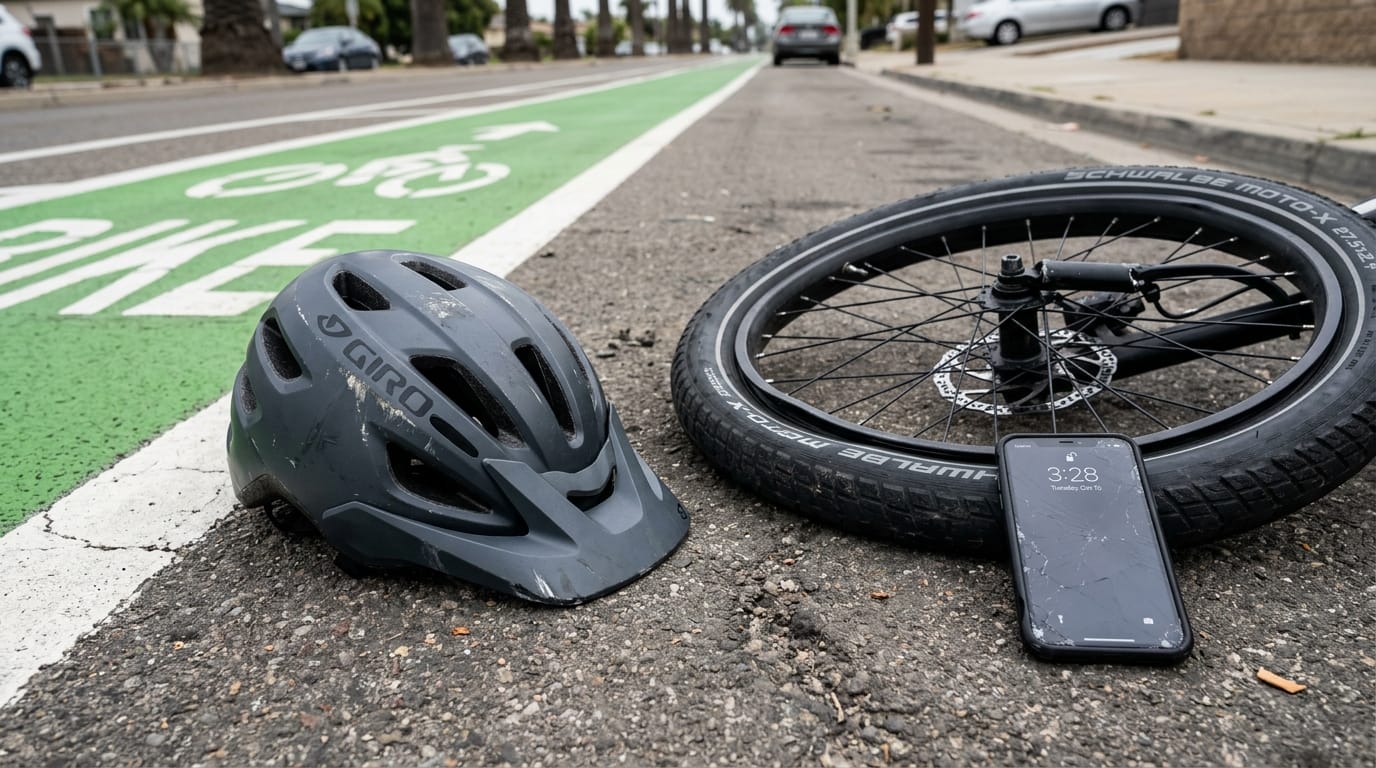
Take photos and videos of the scene. Capture the bike, vehicles, injuries, helmet, road surface, signs, traffic lights, lane markings, crosswalks, debris, and property damage. Also look for nearby cameras from homes, stores, buses, parking lots, or traffic systems.
Do not repair the e-bike too soon. Keep the battery, charger, receipt, manuals, app records, repair records, and damaged parts. These items may help show speed, maintenance problems, product defects, or unsafe modifications.
Insurance coverage can also feel confusing. E-bike riders may not carry auto insurance for the bike. An injured person may need to review auto policies, homeowners insurance, renters insurance, umbrella coverage, business insurance, or uninsured motorist coverage.
The right source of recovery depends on who caused the crash. It also depends on what coverage applies. That is why injured people should avoid rushed statements and quick settlement offers.
Battery fires and defective products should not be ignored
Not every e-bike injury claim involves a traffic collision. Some cases involve battery fires, brake failures, throttle problems, tire defects, weak frames, or unsafe chargers. These problems can create a product liability claim.
If a defect caused the injury, several parties may share responsibility. The claim may involve the manufacturer, seller, distributor, repair shop, or parts supplier.
Product cases need fast evidence preservation. Do not throw away the bike, battery, charger, packaging, receipt, or damaged parts. An expert may need to inspect them later. For a related topic, read Lithium-Ion Battery Fire Injuries in San Diego.
A San Diego e-bike injury claim 2026 case needs careful handling from the start. Riders, parents, pedestrians, and drivers should not guess about fault before reviewing the evidence. More than one person or company may share responsibility.
California injury cases often depend on percentages of fault, available insurance, and the quality of the proof. Shared fault does not always mean there is no claim. It may only affect how much compensation the injured person can recover.
The bottom line is simple. E-bike crashes can involve serious injuries, minors, fast devices, changing safety rules, insurance gaps, product defects, and dangerous streets. Anyone hurt in an e-bike crash in San Diego should document everything, get medical care, preserve the device, avoid rushed insurance statements, and speak with a qualified injury attorney before accepting blame or settlement money.
For more background, you can also read E-Bike Accidents in San Diego: New 2026 Safety Laws, Liability, and What Injured Riders Need to Know.
San Diego E-Bike Injury Claim 2026: What Riders, Parents, and Pedestrians Should Know
A San Diego e-bike injury claim 2026 case can become more complicated than many people expect. E-bikes are now common near schools, beaches, shopping areas, college neighborhoods, downtown streets, and residential roads. They are useful, fast, and convenient. However, the same speed that makes them popular can also make crashes more serious.
Recent San Diego reports have placed e-bike safety back in the spotlight. More riders are using e-bikes for school, work, errands, beach trips, and short-distance transportation. At the same time, crashes involving riders, cars, pedestrians, and minors are raising new legal questions. When someone is injured, the claim may involve traffic laws, rider age, bike class, helmet use, insurance coverage, product defects, road design, and comparative fault.
This guide explains what injured riders, parents, pedestrians, and drivers should understand after an e-bike crash in San Diego. It is for general information only and should not be treated as legal advice. Every case depends on the specific facts, injuries, evidence, insurance policies, and parties involved.
Why San Diego E-Bike Injury Claims Are Becoming A Bigger Issue
E-bikes are not just regular bicycles with a small motor. Some models can travel fast enough to create serious impact forces, especially when mixed with cars, pedestrians, parked vehicles, driveways, crosswalks, and uneven roads. A rider may think they have enough time to stop, but speed, weight, reaction time, and traffic conditions can quickly change the outcome.
San Diego has also been focusing more attention on street safety, speed management, and Vision Zero goals. That matters because many e-bike crashes happen in the same places where drivers, cyclists, scooter riders, and pedestrians already compete for limited space. Bike lanes may suddenly end. Cars may turn across a rider’s path. A pedestrian may step into a crosswalk. A teen rider may move too quickly through a busy area. When a crash happens, fault is rarely obvious from one side’s story alone.
New safety rules can affect how fault is reviewed
California and local agencies have continued updating e-bike safety guidance. The City of San Diego explains that e-bikes are divided into classes, with different speed limits, age rules, and helmet requirements. It also warns riders not to use e-bikes on sidewalks near businesses or in pedestrian-only crosswalk areas. You can review the city’s official safety guidance here: City of San Diego E-Bike Laws & Safety Tips.
These rules matter after a crash because insurance companies look for anything that can shift blame. If a rider was on a sidewalk, going against traffic, using a modified bike, ignoring a stop sign, or riding a Class 3 e-bike while underage, the insurer may argue the rider caused or contributed to the injury. However, that does not automatically excuse a careless driver, unsafe property owner, defective product, or dangerous road condition.
Class, speed, and modification issues matter
One major issue in a San Diego e-bike injury claim 2026 case is whether the device was truly a legal e-bike. Some products look like e-bikes but operate more like electric motorcycles. Others may be modified to exceed legal speed limits. That distinction can affect liability, insurance coverage, and even whether the rider was allowed to operate the device in that location.
If a device was illegally modified, investigators may ask who changed it, who sold it, who maintained it, and who allowed the rider to use it. If the rider is a minor, parents may also face difficult questions about what they knew before the crash. For a related discussion, read Teen E-Bike Accidents in San Diego.
Pedestrians can suffer serious injuries too
E-bike crashes do not only injure riders. Pedestrians can be seriously hurt when struck in a crosswalk, sidewalk area, parking lot, boardwalk, campus walkway, or business district. Older adults, children, and people with mobility limitations may suffer broken bones, head injuries, hip injuries, back injuries, and emotional trauma after being hit by a fast-moving rider.
In pedestrian cases, the key questions often include where the rider was traveling, how fast they were moving, whether the area was meant for pedestrians, whether warning signs were visible, and whether the pedestrian had the right of way. A rider may blame the pedestrian for stepping out suddenly, while the injured pedestrian may argue the rider was operating carelessly. Photos, video, witness statements, and location details can make a major difference.
Drivers may still be responsible for e-bike crashes
Drivers sometimes assume e-bike riders are always at fault because they move quickly or appear suddenly. That is not true. Many crashes happen because a driver fails to yield, turns across a bike lane, opens a door into a rider’s path, speeds through an intersection, drifts into a bike lane, or looks at a phone instead of the road.
Distracted driving is especially important. A driver using a phone, GPS app, music screen, delivery app, or rideshare platform may miss a rider who was visible with proper attention. If phone use is suspected, evidence should be preserved quickly. For more detail, see Distracted Driving Accidents in San Diego.
Intersection design and speed limits can support the claim
Some e-bike crashes happen because of more than one mistake. A driver may be careless, but the intersection may also have poor visibility, confusing lane markings, faded crosswalks, blocked sight lines, or unsafe speed conditions. In 2026, San Diego’s attention on speed management and safer streets may become useful background in some claims.
Street-safety data does not automatically prove liability. However, it can help explain why extra caution was needed in a specific corridor or intersection. If a crash happened in a known high-risk area, the injured person’s attorney may review road design, prior crash history, lighting, speed signs, and bike lane conditions. For more on this issue, read San Diego Speed-Limit Changes and Intersection Injury Claims in 2026.
What To Do After A San Diego E-Bike Crash
The first step after any serious e-bike crash is medical care. Even if the injury seems minor, symptoms can worsen later. Head injuries, concussions, internal injuries, fractures, soft tissue damage, dental trauma, and nerve pain may not be fully obvious at the scene. Medical records also help connect the injury to the crash.
After safety and medical needs are handled, evidence becomes critical. E-bike claims often turn into disputes about speed, lane position, visibility, right of way, helmet use, and whether the rider or driver had enough time to react. Waiting too long can weaken the case because video may be deleted, vehicles may be repaired, skid marks may disappear, and witnesses may become harder to find.
Important evidence to preserve early
Take photos and videos of the crash scene, bike, vehicles, injuries, helmet, road surface, signs, traffic lights, lane markings, crosswalks, debris, property damage, and nearby cameras. Save the e-bike before repairing it. Keep the battery, charger, receipts, manuals, app records, and repair history. If the crash involved a delivery driver, rideshare driver, school area, business, or public road condition, those details may affect who can be held responsible.
Insurance coverage can also be confusing. E-bikes generally do not require auto insurance, so injured people may need to review auto policies, homeowners policies, renters insurance, umbrella coverage, business insurance, product liability coverage, or uninsured motorist coverage. The right source of recovery depends on who caused the crash and what insurance applies.
Battery fires and defective products should not be ignored
Not every e-bike injury claim is only about a collision. Some cases involve battery fires, brake failures, throttle problems, defective tires, weak frames, or unsafe chargers. If a product defect contributed to the injury, the claim may involve the manufacturer, seller, distributor, repair shop, or parts supplier.
Battery-related cases require fast preservation of physical evidence. Do not throw away the bike, battery, charger, packaging, receipt, or damaged parts. Product evidence may be needed for expert review. For a related topic, read Lithium-Ion Battery Fire Injuries in San Diego.
A San Diego e-bike injury claim 2026 case should be handled carefully from the beginning. Riders, parents, pedestrians, and drivers should avoid guessing about fault before the evidence is reviewed. A crash may involve shared responsibility, but shared fault does not mean there is no claim. California injury cases often depend on percentages of responsibility, available insurance, and the strength of the evidence.
The bottom line is simple: e-bike crashes are no longer small neighborhood incidents. They can involve serious injuries, minors, fast devices, changing safety rules, insurance gaps, product defects, and dangerous street conditions. Anyone hurt in an e-bike crash in San Diego should document everything, get medical care, preserve the device, avoid rushed insurance statements, and speak with a qualified injury attorney before accepting blame or settlement money.
For more background, you can also read E-Bike Accidents in San Diego: New 2026 Safety Laws, Liability, and What Injured Riders Need to Know.