
If you have been hurt in a crash and suspect the other driver was texting, scrolling, watching a screen, or fumbling with navigation, you are not alone. Distracted driving accidents in San Diego are a growing concern because modern distraction is no longer limited to old-fashioned texting. Drivers now split their attention between phones, messaging apps, maps, music, smart dashboards, delivery platforms, and in-car entertainment systems. When a crash happens, that lost attention can become the key issue in the injury claim.
For victims, the challenge is not only proving the crash happened. It is proving why it happened. Insurance companies do not usually volunteer that their driver was distracted. They look for uncertainty, missing evidence, or gaps in the timeline. That is why early documentation matters so much. A strong distracted driving claim often depends on preserving the right evidence before it disappears.
This topic also fits naturally with your current content. If you are dealing with a crash right now, you should also review What to Do After a Car Accident in San Diego: 7 Steps to Protect Your Injury Claim, Top 5 Mistakes to Avoid After a Car Accident in San Diego, and The Role of Medical Records in Personal Injury Lawsuits.
Why distracted driving accidents in San Diego matter even more in 2026
Road safety is already a major local issue. San Diego continues to push Vision Zero and released a citywide speed management plan in early 2026 as part of its effort to reduce traffic deaths and serious injuries. At the same time, distracted driving remains a persistent statewide and national safety problem. The risk is not limited to freeway traffic either. Many distraction-related crashes happen on urban streets, near intersections, in heavy stop-and-go traffic, and in areas where drivers are juggling navigation, ride-share pickups, cyclists, pedestrians, and delivery stops.
That matters for injury claims because distraction often overlaps with other forms of negligence. A driver may claim they “never saw” the pedestrian, bike rider, scooter user, or stopped vehicle in front of them. In reality, they may have been looking down at a device at the exact wrong moment. If that is proven, it can significantly strengthen the injured person’s case.
This is especially important in San Diego because the same distraction problem can affect many different case types. It can show up in rideshare crashes, pedestrian accidents, e-bike collisions, and e-scooter injury claims.
What counts as distracted driving?
Many people think distracted driving only means texting. That is way too narrow. A driver can be distracted when they:
- text, message, or check notifications,
- use maps or delivery apps,
- watch or touch in-car entertainment screens,
- search for music or podcasts,
- dial or hold a phone,
- eat, groom, reach for objects, or interact with passengers,
- look away from the road long enough to miss traffic conditions.
California’s hands-free law is one reason these cases matter so much. Even when a driver claims they were “just checking directions,” phone and device use behind the wheel can still become important evidence when the crash investigation begins.
How distraction can change liability
In any personal injury case, negligence is about whether someone failed to use reasonable care. A distracted driver may rear-end another vehicle, drift into a neighboring lane, miss a red light, fail to yield, or strike a pedestrian or rider they should have seen. When distraction caused that failure, it can become one of the strongest facts in the case.
Sometimes liability is straightforward. One driver was looking at a phone and hit another car. But many cases are more complicated. A distracted driving claim may also involve:
- a rideshare driver using the app while driving,
- a delivery driver working under pressure from route notifications,
- a commercial driver interacting with dispatch systems,
- a company vehicle where employer policies and device use matter,
- a government vehicle or dangerous roadway issue that creates a separate claim deadline.
That is why it is a mistake to assume the only issue is what happened in the five seconds before impact. Sometimes the bigger story includes employer expectations, trip logs, camera footage, or app activity that helps explain the crash.
How to prove the other driver was distracted
Phone records and app activity
Phone records do not always show the full content of what a person was doing, but they can still help establish timing. Calls, messages, data use, ride-share app activity, and delivery platform logs can all become relevant if they line up with the collision.
Dashcam, business, and traffic-area video
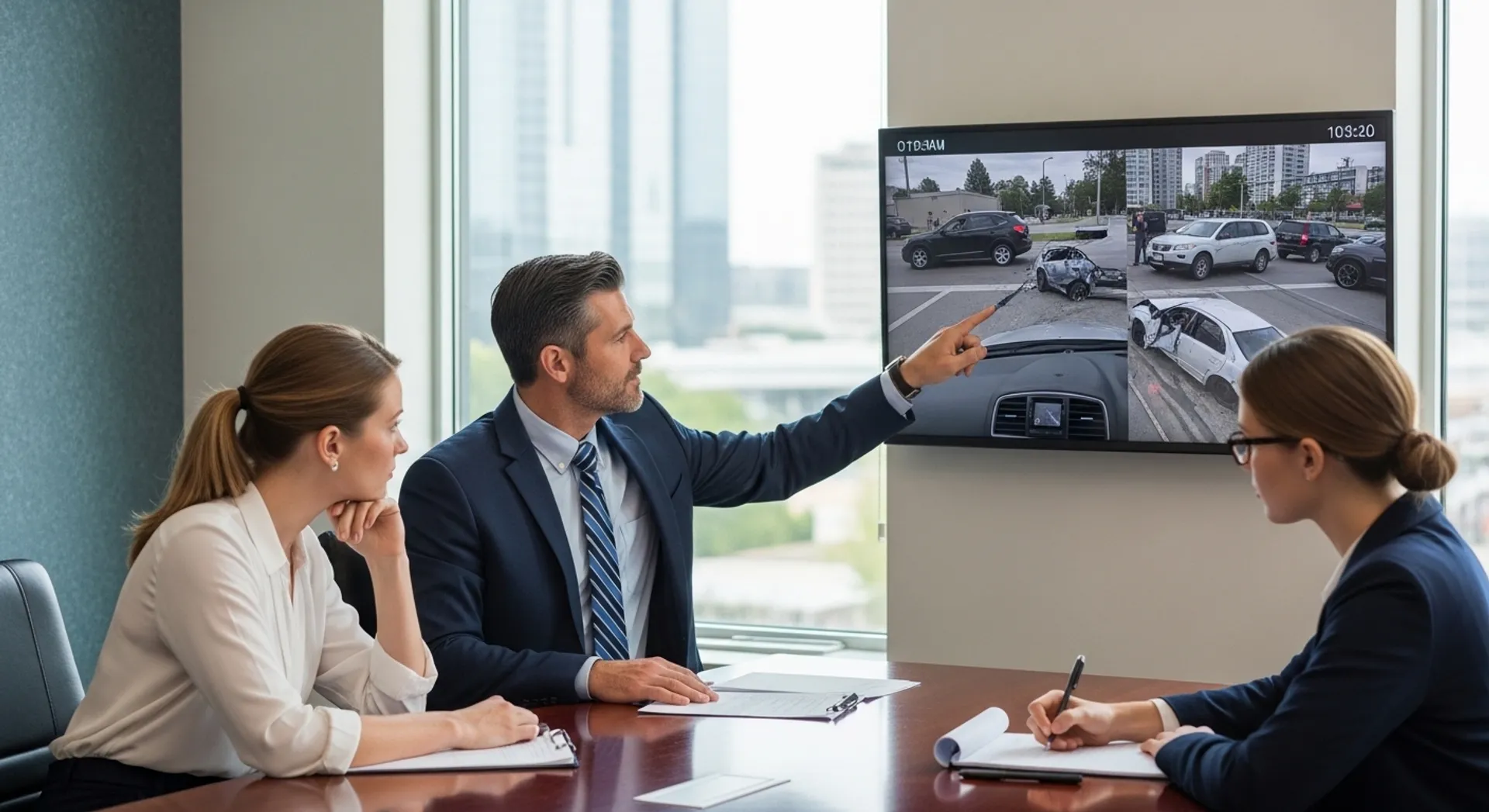
Nearby cameras can be huge. A dashcam may show a driver drifting, failing to brake, or looking down right before impact. Business cameras, residential security cameras, parking lot footage, and intersection-area surveillance may also help lock down what happened. The problem is timing. Many systems overwrite footage quickly.
Witness statements
Neutral witnesses matter more than people realize. Someone may have seen the driver holding a phone, looking down repeatedly, or failing to react until the last second. Those details can make a big difference when the insurance company tries to call the crash “unavoidable.”
Police reports and officer observations
Police reports are not perfect, but they can be useful. An officer may note statements from the parties, admissions, citations, observed device use, or other facts suggesting inattention. Even if distraction is not proven at the scene, the report can still provide a starting point for deeper investigation.
Vehicle and digital data
Modern vehicles generate more data than many drivers realize. In some cases, infotainment systems, telematics, event data recorders, and connected app histories may help establish what the driver was doing and whether braking, steering, or reaction timing was delayed. Not every case justifies that level of investigation, but serious injury claims often do.
What to do after a suspected distracted driving crash
- Get medical care immediately. Your health comes first, and your records will also help connect the injuries to the crash.
- Call law enforcement. Ask for an official report if officers respond.
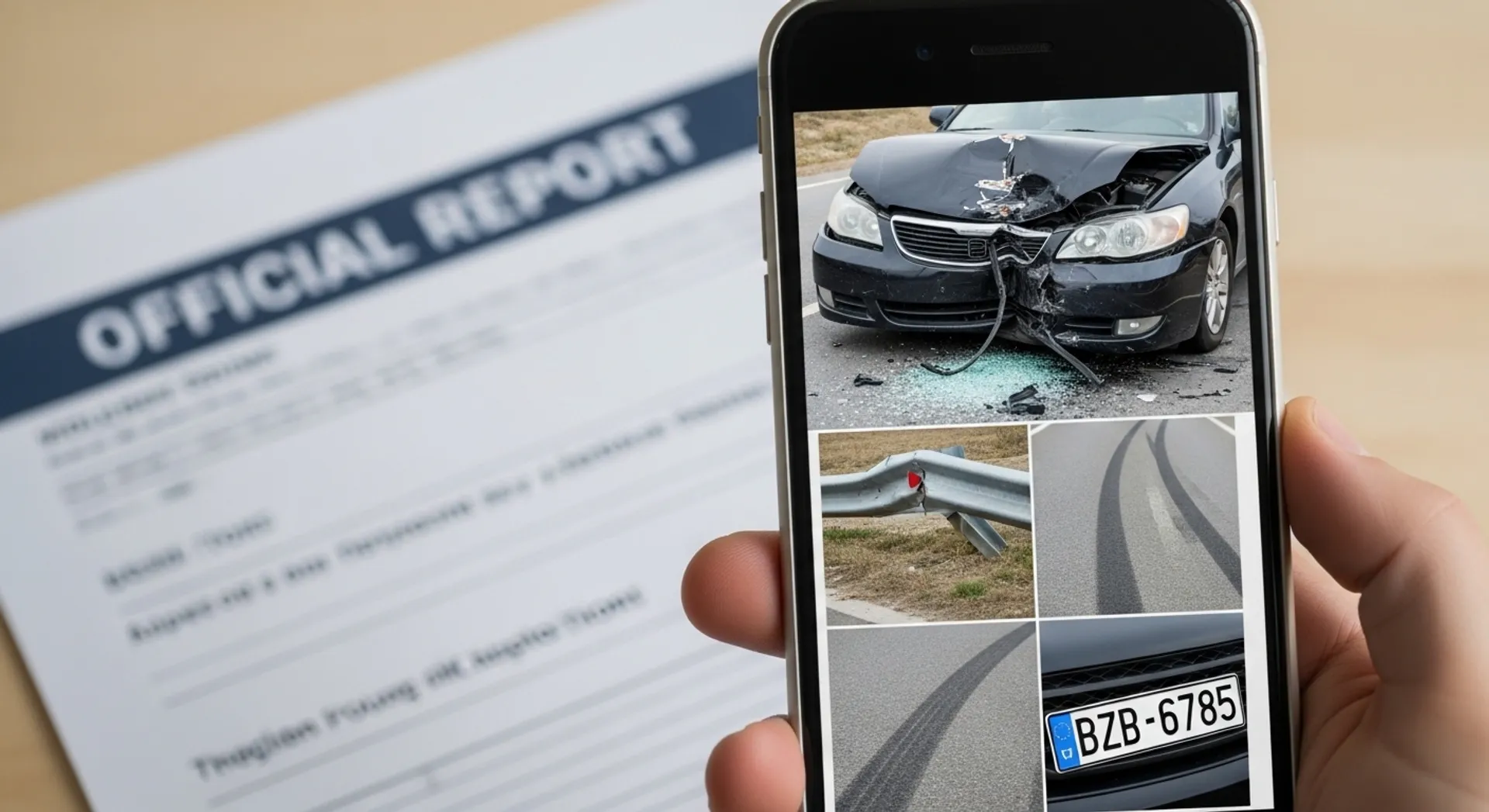
- Photograph everything. Capture vehicle positions, damage, skid marks, traffic signals, the roadway, and visible injuries.
- Note possible distraction clues. Did you see the other driver holding a phone, looking down, or fumbling with a screen? Write it down while it is fresh.
- Get witness names and contact details. Independent witnesses can become critical later.
- Do not overshare with the insurer. Keep your statements factual and brief.
- Talk to a lawyer early. Evidence like footage, app logs, and phone records becomes harder to preserve with time.
If you have not already read it, pair this with How to Maximize Your Personal Injury Settlement in San Diego. The evidence you preserve in the first few days can heavily affect the value of the claim later.
Common mistakes that weaken distracted driving claims
- Waiting too long to seek treatment. Insurance companies love gaps in care.
- Assuming the police report is enough. It may help, but it rarely tells the whole story.
- Failing to request preservation of video or digital evidence. Once footage is overwritten, it is usually gone.
- Not documenting what you observed. Small details disappear from memory fast.
- Accepting a quick settlement. Early offers are often built around limited evidence and incomplete treatment records.
What compensation may be available?
If distracted driving caused the crash, the injured victim may be able to recover compensation for medical expenses, future treatment, lost wages, loss of earning capacity, pain and suffering, emotional distress, and property damage. In more serious cases, long-term rehabilitation, disability-related losses, and ongoing care costs may become part of the case as well.
The stronger the proof, the harder it becomes for the defense to downplay what happened. That is why distraction evidence and medical evidence work best together. One shows how the crash happened. The other shows what it cost you.
Do not lose track of the filing deadline
Even a strong claim can fall apart if the deadline is missed. In California, personal injury claims usually have a two-year filing period, and claims against government entities usually move much faster. For a deeper explanation, see Understanding California’s Statute of Limitations for Personal Injury Claims. If a city vehicle, public roadway condition, or government agency is involved, waiting is a bad bet.
Final thoughts
Distracted driving accidents in San Diego are not just about texting anymore. They can involve phones, apps, dashboards, cameras, navigation systems, and split-second attention failures that leave victims with serious injuries and expensive recoveries. The real battle in these cases is often evidence. If you can preserve the right records early, your claim becomes much stronger.
If you suspect the other driver was distracted, do not treat that fact like a side note. It may be the center of the entire case. Document the crash, protect the digital evidence, get medical care, and take the legal deadline seriously. That is how you keep the insurance company from rewriting the story before the facts are fully known.