A San Diego daylighting law accident claim can become important when a pedestrian, cyclist, scooter rider, or driver is hurt near a crosswalk with blocked visibility. Many people think a crosswalk crash is only about who had the green light or who entered the intersection first. However, the story can be more complicated. Parked cars, blocked sightlines, curb design, speeding, distraction, and missing evidence can all affect fault.
California’s daylighting law has brought new attention to this issue. The rule is designed to keep vehicles away from crosswalk approaches so drivers and people crossing the street can see each other sooner. In a city like San Diego, that matters. Busy neighborhoods, beach traffic, delivery stops, school zones, rideshare pickups, and tourist corridors can all create dangerous visibility problems.
This article is for educational purposes only. It is not legal advice. Still, it can help injured people understand why crosswalk visibility matters, what evidence to preserve, and how a San Diego daylighting law accident claim may be reviewed by insurance companies, attorneys, and investigators.
Why Daylighting Matters in San Diego Crosswalk Injury Cases
Daylighting is a street-safety concept. It keeps the area next to a crosswalk clear of parked vehicles. As a result, drivers can see pedestrians sooner. Pedestrians can also see approaching vehicles before stepping farther into the street.
The San Francisco Municipal Transportation Agency explains that daylighting improves safety by creating a better line of sight between people driving and people in crosswalks. It also explains that California’s AB 413 made it illegal, starting January 1, 2025, to park within 20 feet of the approach side of a marked or unmarked crosswalk. You can review that outside authority here: California daylighting law explanation.
San Diego is also focused on safer streets. The City of San Diego says its Vision Zero safety work is aimed at improving streets and sidewalks for pedestrians, cyclists, and drivers. That local safety context does not automatically prove a personal injury claim. However, it can help explain why visibility, speed, and careful driving matter at a specific intersection.
If you want related background, read our guide on pedestrian accidents in San Diego. It explains how local safety initiatives may affect pedestrian injury claims.
Blocked sightlines can change the fault discussion
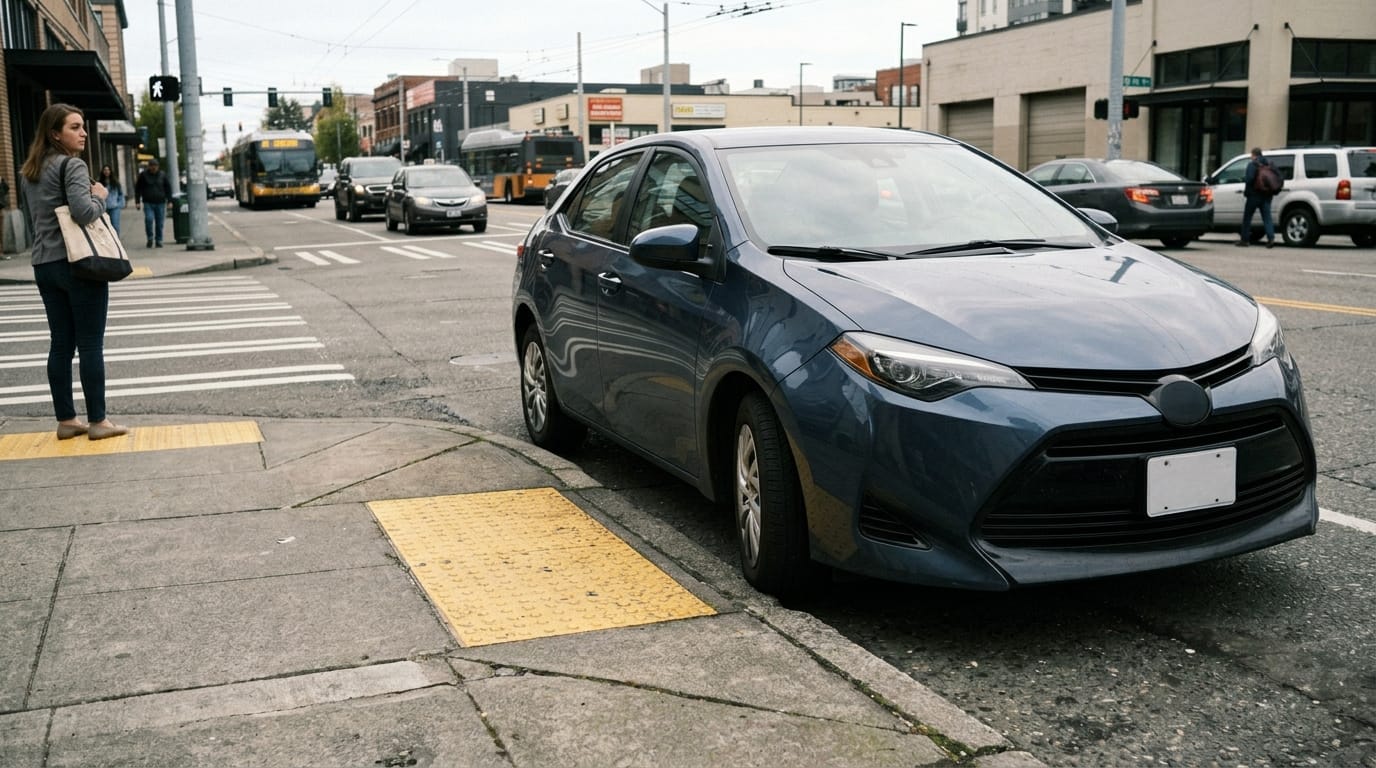
In many crosswalk crashes, the driver says they “never saw” the injured person. Sometimes that statement is an excuse. However, sometimes the location itself made visibility worse. A vehicle parked too close to the corner can hide a pedestrian until the last second. A delivery van, SUV, or truck can make the problem even worse.
That does not mean the injured person automatically wins the case. It also does not mean every parked vehicle owner becomes responsible. Instead, it means the investigation should look beyond the moment of impact. The position of parked cars, the crosswalk layout, lighting, curb markings, and driver speed may all matter.
For example, a driver approaching a crosswalk should use reasonable care. If parked cars limit visibility, the driver may need to slow down and scan carefully. At the same time, the defense may argue that the pedestrian entered suddenly or outside a safe crossing moment. Because of that, evidence becomes critical.
Illegal parking near a crosswalk may become important evidence
If a vehicle was parked within the restricted daylighting zone, that fact may support the injured person’s argument. It may show that visibility was reduced because a vehicle was where it should not have been. It may also help explain why the driver, pedestrian, cyclist, or scooter rider had less time to react.
Still, the analysis is not always simple. A parked vehicle may block sightlines, but the moving driver may still be the main cause. In other cases, a property owner, commercial vehicle operator, delivery company, or government roadway issue may need closer review. The key is to document the scene before anything changes.
Red curbs are helpful, but absence of paint does not end the issue
Many people assume a parking restriction only exists if the curb is painted red. That assumption can be risky. The daylighting rule can apply even when the curb is not painted. This is important because not every corner in San Diego will be clearly marked at the same time.
For injury claims, this can create disputes. A driver, parked vehicle owner, or insurer may argue the area was confusing. However, confusion about markings does not erase the need to examine the law, the scene, and the facts. Photos of the curb, signage, crosswalk, vehicle position, and distance from the corner may become valuable.
Crosswalk claims often involve comparative negligence
California injury cases often involve arguments about shared fault. This is called comparative negligence. In a crosswalk case, the insurance company may claim the injured person was partly responsible. They may argue the person crossed too late, moved outside the crosswalk, failed to watch traffic, or entered from behind a parked vehicle.
Because of that, a San Diego daylighting law accident claim should be built carefully. The injured person needs more than a general statement that the crash was unfair. They need facts. Photos, witness accounts, video, police observations, medical records, and measurements can all help.
This issue connects closely with intersection cases. You may also want to read our guide on San Diego speed-limit changes and intersection injury claims. It explains how street context can affect fault arguments.
Speed, distraction, and visibility often overlap
Daylighting is only one part of the safety picture. A crash may also involve speeding, phone use, unsafe turns, rideshare pickups, delivery stops, or failure to yield. For example, a driver may say a pedestrian appeared suddenly. However, video may show the driver was looking down, rolling through a turn, or approaching too fast for the conditions.
That is why distracted-driving evidence can matter. If phone use, navigation, delivery apps, or dashboard screens played a role, the case may become stronger. For more detail, read our article on distracted driving accidents in San Diego.
What Evidence Helps a San Diego Daylighting Law Accident Claim
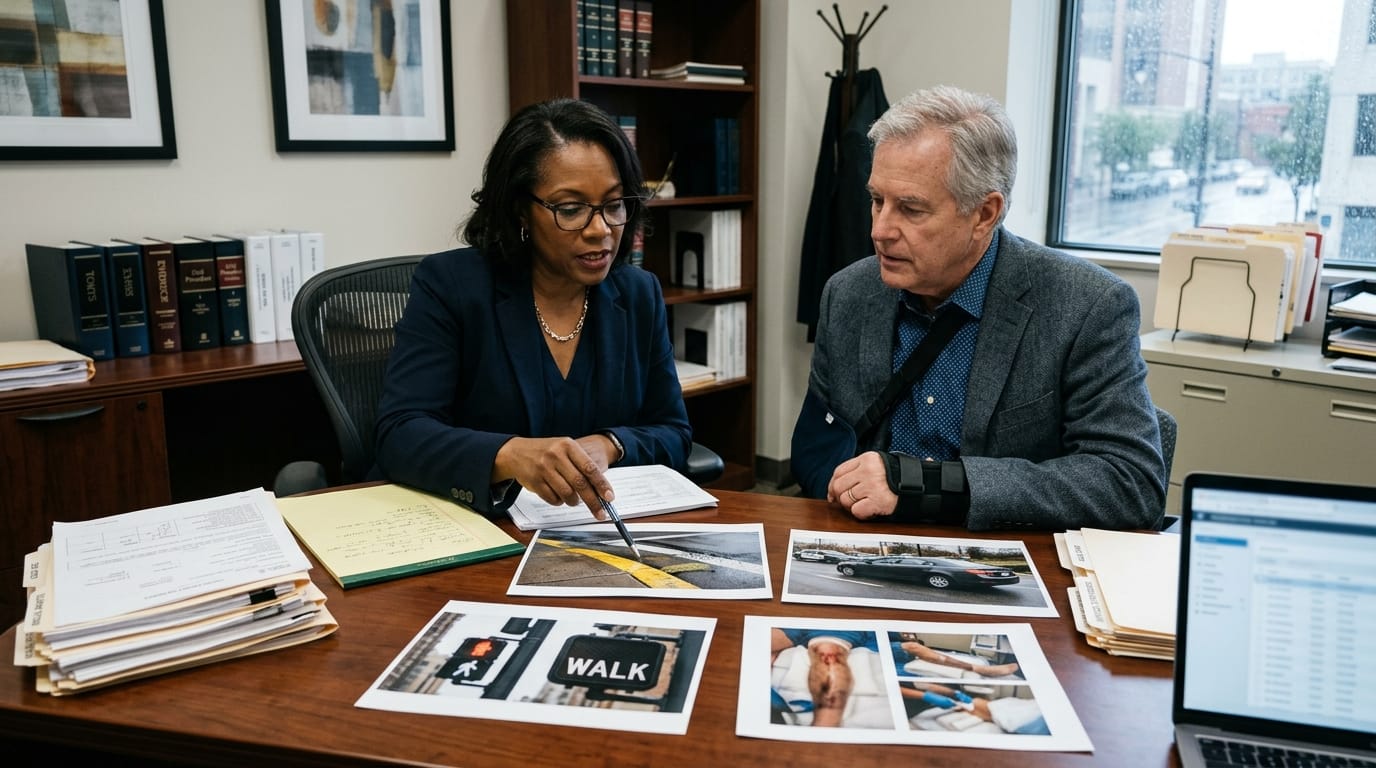
Evidence can disappear fast after a crosswalk crash. Cars move. Red curb markings may be added later. Businesses may overwrite surveillance footage. Witnesses may leave. Weather and lighting conditions may change. Therefore, the first few days after the crash can be very important.
Start with medical care. Then document the scene if it is safe to do so. Take photos from the driver’s approach direction. Also take photos from the pedestrian’s point of view. This can show whether parked vehicles blocked the line of sight. It can also show the distance between the parked vehicle and the crosswalk.
Photos should include the crosswalk, curb, traffic signals, lane markings, stop signs, parked vehicles, skid marks, debris, lighting, nearby businesses, and any cameras. If a delivery vehicle or rideshare vehicle was involved, capture company markings, license plates, and app-related trip details when available.
For basic post-crash steps, review what to do after a car accident in San Diego. Even if the crash involved a pedestrian instead of two vehicles, many evidence-preservation steps are similar.
Photos, video, witness statements, and medical records matter most
The strongest claims usually combine scene evidence with medical proof. Scene evidence explains how the crash happened. Medical records explain what the crash caused. Both are needed because insurance companies often dispute fault and injury value at the same time.
Ask nearby businesses whether they have exterior cameras. Also check homes, apartment buildings, dashcams, rideshare cameras, and traffic-area cameras. Do this quickly. Many systems overwrite footage within days or even hours.
Witnesses can also be powerful. A neutral witness may have seen a vehicle parked too close to the crosswalk. Another witness may have seen the moving driver fail to slow down. Someone else may have noticed the injured person was visible before impact. These details can prevent the insurer from reshaping the story later.
Medical records matter just as much. Delayed care can create problems. The insurance company may argue the injury was minor or unrelated. Therefore, injured people should get checked, follow treatment instructions, and keep records of symptoms, missed work, appointments, and out-of-pocket expenses.
Deadlines should be reviewed early
Do not wait too long to review deadlines. California personal injury cases have strict time limits. Also, if a public entity may be involved because of roadway design, signage, curb work, or a government vehicle, shorter claim deadlines may apply.
That does not mean every crosswalk case involves the city. Many cases are mainly about driver negligence. However, when road design or public property may be part of the story, delay can hurt the claim. Read our guide on California’s statute of limitations for personal injury claims so you understand why timing matters.
In the end, a San Diego daylighting law accident claim is about more than one parking rule. It is about visibility, reasonable care, timing, and proof. The daylighting law can help frame the safety issue. However, the real strength of the claim depends on evidence from the actual crash.
If you were hurt near a crosswalk, document the scene as soon as possible. Preserve photos and video. Get witness names. Seek medical care. Then review the facts with a qualified professional before giving broad statements to an insurance company. In 2026, crosswalk visibility is no longer a small detail. It may be one of the key facts that explains why the crash happened.