A San Diego delivery driver accident claim can become more complicated than a normal car crash. At first, it may look simple. A delivery driver hit another car, pedestrian, cyclist, or scooter rider. However, the real legal questions often go deeper. Was the driver using a delivery app? Was the driver rushing to complete an order? Was the vehicle owned by a company? Was the driver an employee, contractor, or gig worker?
In 2026, these questions matter more because delivery services are part of daily life in San Diego. Food delivery, grocery delivery, package delivery, pharmacy delivery, and same-day retail delivery all place more drivers on busy streets. As a result, injured people may face insurance issues, app evidence problems, and disputes over who is responsible.
This article is for educational purposes only. It is not legal advice. Still, it can help injury victims understand how a San Diego delivery driver accident claim may be investigated. It also explains what evidence may matter, why app distraction is important, and why quick documentation can protect a claim.
Why Delivery Driver Accidents Are Different From Ordinary Crashes
Delivery driver crashes often involve more than two private motorists. A delivery driver may be working for a restaurant, package company, grocery platform, courier service, or app-based business. Because of that, the insurance and liability questions can become more complex.
For example, the driver may have personal auto insurance. However, personal coverage may not fully apply when the driver is working. There may also be a commercial policy, platform-based coverage, employer coverage, or a dispute about whether the driver was actively making a delivery at the time of the crash.
Another issue is distraction. Delivery drivers often rely on phones, navigation, route updates, customer messages, order notifications, and pickup instructions. NHTSA reports that 3,208 people were killed in crashes involving distracted drivers in 2024. You can review the agency’s safety information here: NHTSA distracted driving.
California also restricts handheld phone use while driving. That can matter when a delivery driver claims they were only checking a route or order update. In many cases, phone position, app use, and timing may become important evidence.
App distraction can become central evidence
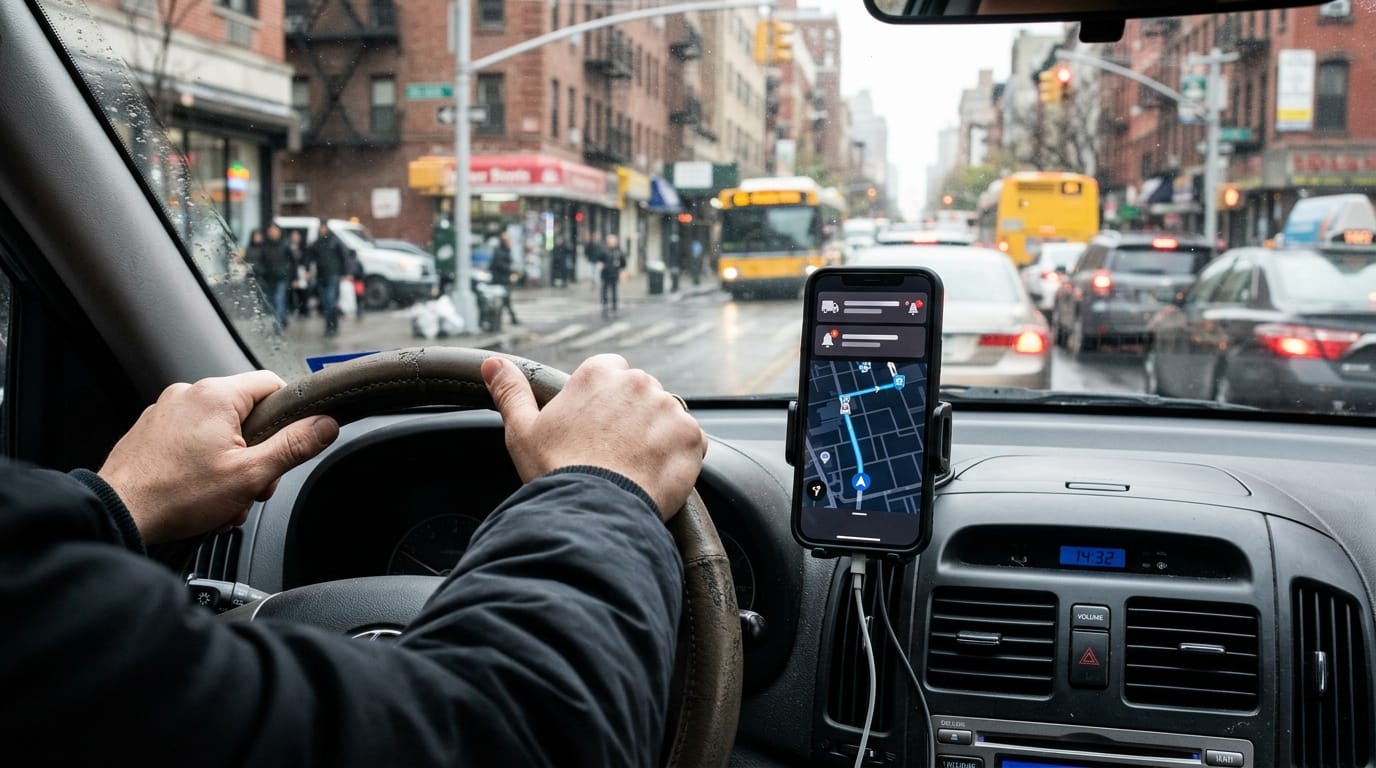
In a San Diego delivery driver accident claim, app distraction may be one of the most important issues. A driver may say they were paying attention. However, app records, phone data, notifications, dashcam footage, or witness statements may tell a different story.
Delivery apps can create constant interaction. A driver may accept orders, follow GPS directions, message customers, check drop-off notes, scan packages, confirm pickup, or update delivery status. Even a short glance can matter. At city speeds, a few seconds of lost attention can be enough to miss a red light, stopped traffic, crosswalk, cyclist, or scooter rider.
This topic connects directly with our guide on distracted driving accidents in San Diego. That article explains how phone, app, and screen evidence can strengthen an injury claim when preserved early.
Phone records, app logs, and route data may matter
Phone records may show calls, messages, or data activity near the time of the crash. App logs may show whether the driver was accepting an order, navigating to a pickup, completing a drop-off, or communicating with a customer. Route data may show whether the driver was behind schedule or making repeated stops.
However, this evidence can disappear or become harder to obtain. App platforms, delivery companies, restaurants, and retailers may control different pieces of the timeline. Therefore, injured people should not wait too long before asking that digital evidence be preserved.
Rushing, double parking, and sudden stops can affect fault
Delivery work can create pressure. Some drivers rush to meet time estimates. Others double park, stop suddenly, block bike lanes, or make quick turns near restaurants and apartment buildings. These choices can create serious risks, especially in dense San Diego neighborhoods.
A crash may happen because the driver was speeding. It may also happen because the driver stopped in an unsafe location, opened a door into traffic, backed up without checking, or made a sudden turn to avoid missing an address. In each case, the facts matter.
Insurance coverage is often disputed
Insurance is one of the hardest parts of a delivery driver case. The injured person may assume the driver’s insurance will pay. However, the insurer may deny coverage if the driver was using the vehicle for delivery work. Then the delivery company or app platform may argue its policy does not apply either.
This can create delays and finger-pointing. The driver may blame the platform. The platform may blame the driver. A restaurant or retailer may claim it had no control over the driver. Meanwhile, the injured person may be dealing with medical bills, lost income, pain, and vehicle damage.
This is similar to some rideshare cases. If you want related background, read our guide on San Diego rideshare accidents. Rideshare and delivery claims are not identical, but both can involve app status, layered insurance, and corporate coverage disputes.
Personal, commercial, and platform policies may overlap
A delivery crash may involve several possible policies. The driver may have personal auto insurance. The vehicle owner may have a separate policy. A delivery platform may offer limited coverage during certain work periods. A company may have commercial insurance if the driver was an employee.
The key question is what the driver was doing at the exact time of the crash. Were they logged into the app? Had they accepted an order? Were they heading to pick up food? Were they transporting goods? Had the delivery already ended? These details can change the insurance analysis.
Evidence That Can Strengthen a Delivery Driver Accident Claim
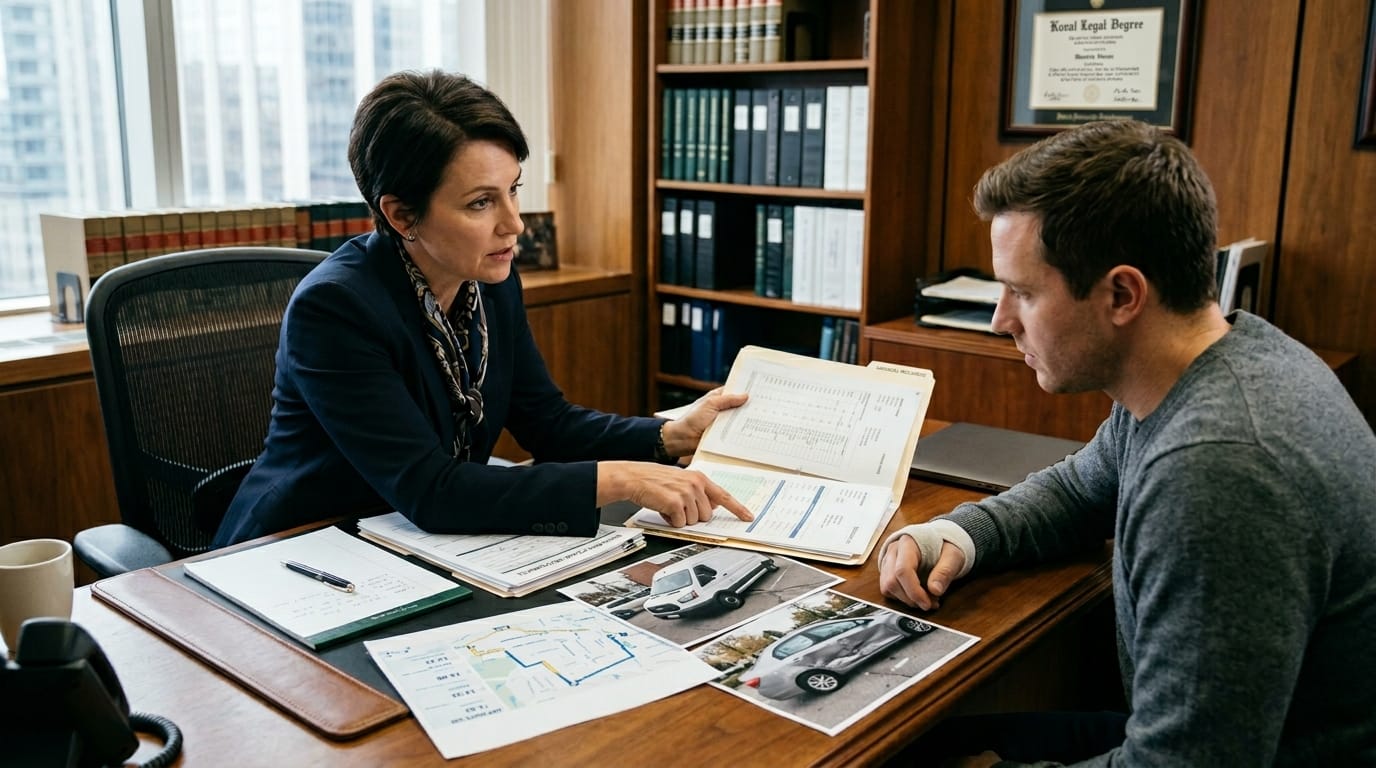
Evidence should be collected quickly after a delivery crash. The scene may change within minutes. The delivery driver may leave to finish an order. Vehicles may be moved. App screens may update. Nearby cameras may overwrite footage. Because of that, early documentation can make a major difference.
First, seek medical care. Then call law enforcement if anyone is injured or if the crash is serious. Take photos of vehicle positions, damage, skid marks, traffic signals, delivery bags, company logos, license plates, and the driver’s phone mount if visible. Also take pictures of nearby restaurants, stores, apartment entrances, crosswalks, bike lanes, and cameras.
Get the driver’s name, license, insurance information, employer or platform information, and vehicle owner details. If the driver was making a delivery, note the company name, app logo, restaurant, package label, or delivery bag. These details may help identify additional insurance or responsible parties later.
For general crash steps, review what to do after a car accident in San Diego. The same basic documentation steps can help in a delivery driver claim.
Medical records and timeline proof work together
A strong injury claim needs both liability evidence and medical evidence. Liability evidence explains why the crash happened. Medical evidence explains what the crash caused. If one side is weak, the insurance company may use that weakness to reduce the claim.
For example, app logs may show the driver was using a delivery platform. Video may show the driver failed to yield. However, if the injured person waited too long to get medical care, the insurer may argue the injuries were minor or unrelated. That is why treatment timing matters.
Medical records should document symptoms, diagnosis, treatment plan, work restrictions, pain levels, imaging, physical therapy, and follow-up care. Also keep receipts for medications, travel to appointments, medical devices, and out-of-pocket expenses.
Speed and intersection evidence may also matter. If the crash happened near a dangerous intersection or busy corridor, review San Diego speed-limit changes and intersection injury claims. Street design and speed context can sometimes support the fault investigation.
Deadlines and UM/UIM coverage should be reviewed early
Do not wait to review deadlines. California injury claims have strict filing limits. Also, claims involving public entities can have shorter deadlines. If a city vehicle, public roadway condition, or government-related issue may be involved, early review is especially important.
Insurance gaps should also be considered. Some delivery drivers may be underinsured or may have coverage disputes. In that situation, your own uninsured or underinsured motorist coverage may become important. Read our guide on San Diego uninsured driver accident claims for more background.
Finally, review the filing deadline. Our guide on California’s statute of limitations for personal injury claims explains why waiting can damage even a strong case.
A San Diego delivery driver accident claim is often about more than one careless driver. It may involve app activity, route pressure, commercial policies, employer control, vehicle ownership, and digital evidence. That is why injured people should document the crash carefully and avoid giving broad statements before the facts are clear.
In the end, the strongest claims are built early. Get medical care. Photograph the scene. Preserve app and video evidence. Identify the delivery company or platform. Then review insurance and deadlines before the evidence disappears. Delivery crashes are modern injury cases, and modern cases require modern proof.