Daylighting crosswalk accidents in San Diego are getting more attention because visibility can decide whether a driver sees a pedestrian, cyclist, scooter rider, or child in time. A parked vehicle near a corner may seem harmless. In reality, it can block sight lines and turn a normal crossing into a serious crash risk.
California’s daylighting law, also known as AB 413, changes how drivers must park near crosswalks. The rule focuses on keeping space clear near intersections so road users can see each other sooner. This matters in San Diego, where busy neighborhoods, beach traffic, school zones, rideshare pickups, delivery vehicles, and crowded streets already create dangerous conditions.
For injured people, the law may also affect a personal injury claim. A driver may say they never saw the pedestrian. A parked vehicle may have blocked the view. A property owner, driver, city agency, or another party may become part of the investigation. The key question is simple: did someone fail to use reasonable care?
This guide explains how daylighting crosswalk accidents can happen, what evidence matters, and why early documentation can help strengthen a San Diego injury claim.
Why Daylighting Crosswalk Accidents Matter in San Diego
Daylighting means keeping the area near a crosswalk clear of parked vehicles. The goal is better visibility. When cars park too close to a crosswalk, drivers may not see people entering the street. Pedestrians may also struggle to see approaching vehicles. That short delay can cause a crash.
Under California’s daylighting rule, vehicles may not park, stop, or stand within 20 feet of the approach side of a marked or unmarked crosswalk. If a curb extension or bulb-out exists, the distance may be 15 feet. The rule can apply even when the curb has no red paint or sign.
For official local guidance, National City explains California’s Daylighting Law under Assembly Bill 413. San Diego drivers, residents, and visitors should understand this rule because crosswalk visibility can affect both crash prevention and legal fault.
How Blocked Views Lead to Serious Injuries
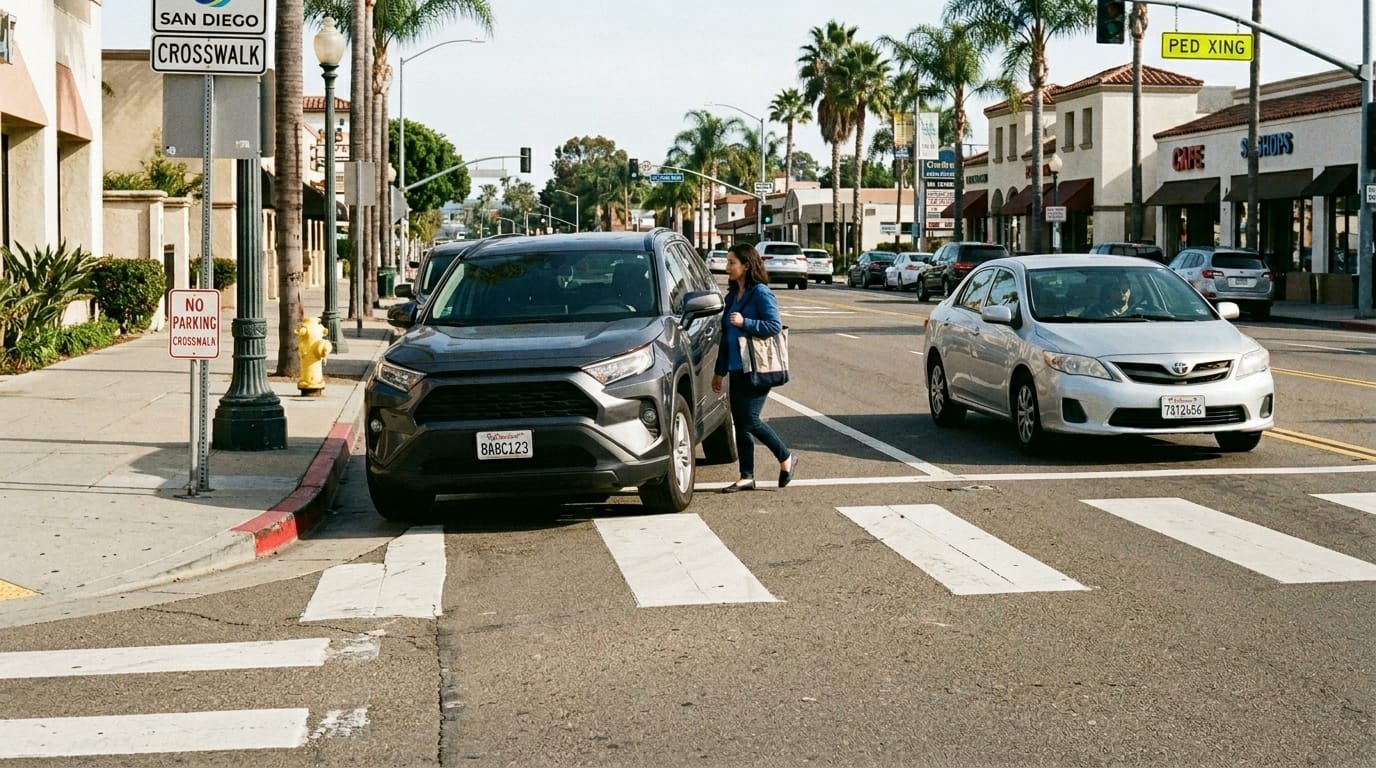
Blocked views cause problems fast. A pedestrian may step into a crosswalk after checking both directions. A driver may approach the intersection and fail to see the person until the last second. A cyclist or scooter rider may also enter the crossing from behind a parked truck or SUV.
Large vehicles create even bigger blind spots. Delivery vans, pickup trucks, SUVs, and rideshare vehicles can hide a pedestrian from view. At night, the risk increases. Poor lighting, dark clothing, rain, phone distraction, and speeding can make the crash worse.
Daylighting crosswalk accidents often lead to severe injuries. Victims may suffer broken bones, head injuries, back injuries, torn ligaments, internal injuries, or long-term pain. Older adults and children face higher risks because their bodies may not tolerate impact well.
Unmarked Crosswalks Still Matter
Many people think a crosswalk only exists when the road has painted white lines. That is not always true. Intersections can have unmarked crosswalks where sidewalks continue across the street. Drivers still need to watch for pedestrians and use care.
This matters in injury claims. A driver may argue that the person crossed outside a marked crosswalk. However, the law may still recognize an unmarked crossing. Photos, diagrams, curb ramps, sidewalks, and intersection layout can help explain the crossing area.
Parked Cars Can Become Part of the Investigation
After a crosswalk crash, the parked vehicle may matter as much as the moving vehicle. Investigators may ask where the parked car stood, how close it was to the crosswalk, whether it blocked the view, and whether the driver violated the daylighting rule.
If the parked car blocked sight lines, the injured person should document it right away. Take photos from the driver’s view and the pedestrian’s view. Capture the curb, crosswalk, signs, lane markings, and vehicle position before anything changes.
Who May Be Liable After a Crosswalk Crash?
Liability depends on the facts. The moving driver may be liable if they sped, failed to yield, looked at a phone, turned carelessly, or ignored road conditions. A parked driver may face scrutiny if they stopped or parked in a restricted daylighting zone.
Other parties may also matter. A rideshare or delivery driver may have caused a visibility problem during a pickup or drop-off. A business may have camera footage that shows the crash. A city or public agency may become relevant if poor road design, broken signals, missing signs, or dangerous conditions contributed to the injury.
California uses comparative negligence. This means more than one person can share fault. An insurance company may blame the pedestrian, cyclist, driver, or parked vehicle owner. That is why evidence matters. The stronger the evidence, the harder it becomes for an insurer to rewrite the story.
Driver Distraction Can Make the Claim Stronger
Distraction often appears in crosswalk cases. A driver may claim the pedestrian came out of nowhere. In reality, the driver may have looked at a phone, navigation screen, delivery app, or dashboard display. Even a two-second glance can cause a serious crash.
If distraction may have played a role, preserve evidence quickly. Look for phone use, dashcam footage, business cameras, rideshare records, delivery logs, and witness statements. You can also review our guide on distracted driving accidents in San Diego for more evidence tips.
How Evidence Can Strengthen a Daylighting Injury Claim
Strong evidence can make or break daylighting crosswalk accidents. The scene can change quickly. Parked cars move. Traffic clears. Skid marks fade. Witnesses leave. Cameras overwrite video. If you wait too long, important proof may disappear.
Start with medical care and a police report. Then document the location. Take photos of the crosswalk, curb, parked vehicles, signs, traffic lights, lighting, road markings, and nearby businesses. Capture wide shots and close shots. A wide photo shows the full scene. A close photo shows details.
Video can help even more. A short video from the pedestrian’s point of view can show how a parked car blocked visibility. Another video from the driver’s approach can show whether the pedestrian was hidden until the final moment.
What to Preserve After a San Diego Crosswalk Accident
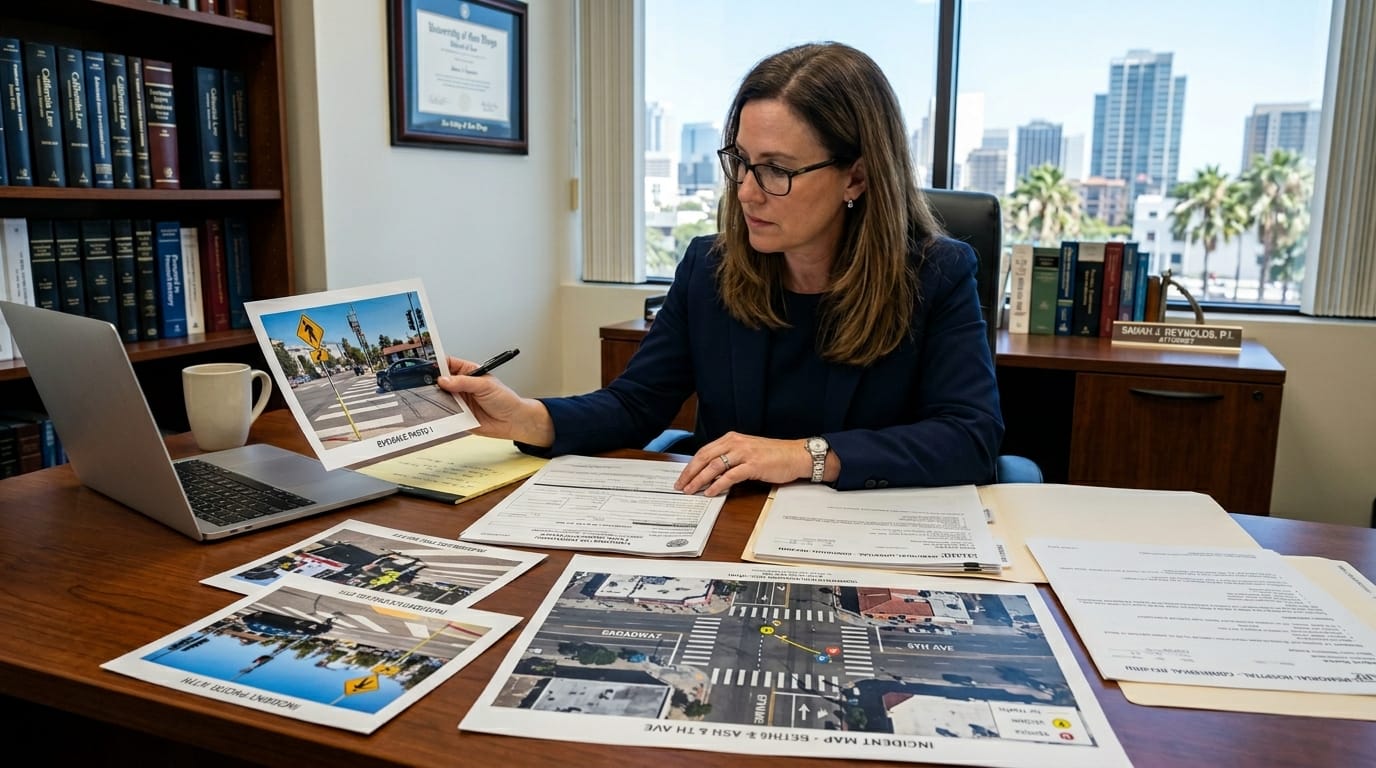
Preserve every detail that explains how the crash happened. Save medical records, hospital bills, photos, videos, witness names, police report details, and insurance letters. If you wore damaged clothing, shoes, glasses, or a helmet, keep them. Do not repair or throw away damaged personal items too soon.
Ask nearby businesses about video quickly. Many stores, apartments, and parking lots record over footage within days. A lawyer can send a preservation letter before the footage disappears. That step can protect key proof.
You should also document pain and daily limits. Write down missed work, sleep problems, medical visits, mobility issues, headaches, anxiety, and activities you cannot do. Insurance companies often focus on paperwork. A clear injury timeline can support the real impact of the crash.
Street Safety Data Can Support the Bigger Picture
Street safety data does not replace direct proof from the crash. Still, it can help explain why the location was risky. The City of San Diego’s Vision Zero program focuses on reducing traffic deaths and serious injuries through safer speeds, better visibility, and safer road design.
Your claim should still focus on the crash itself. However, local safety context can help show why drivers needed extra caution. This is especially useful near schools, business districts, beach areas, transit stops, and high-traffic intersections.
If your case involves an intersection, you may also want to read our article on San Diego speed-limit changes and intersection injury claims. If the at-fault driver lacks coverage, review our guide on San Diego uninsured driver accident claims.
Final takeaway: Daylighting crosswalk accidents in San Diego can involve more than one careless driver. A blocked view, illegal parking, distraction, unsafe speed, poor lighting, or dangerous road design can all shape the claim. Get medical care, report the crash, document the scene, preserve video, and protect your legal options before giving detailed statements to insurance companies.