
AI insurance claims are becoming a bigger concern for San Diego injury victims in 2026. Insurance companies now use more digital tools to review claims, sort documents, estimate damages, detect fraud, compare medical treatment, and evaluate settlement value. These tools can make claim handling faster, but faster does not always mean fairer for the injured person.
After a crash, slip and fall, rideshare collision, pedestrian accident, or uninsured driver claim, the injured person may assume a human adjuster carefully reviews every detail. In reality, software may influence parts of the process before a final offer appears. An insurance company may use data from past claims, medical billing patterns, repair estimates, diagnosis codes, treatment timelines, and claim notes to decide how much pressure to apply or how much to offer.
The problem is simple. An injury claim is personal, but automated systems may treat it like a pattern. A computer tool may not fully understand pain, fear, missed work, family stress, transportation problems, delayed symptoms, or the way a crash affects daily life. That is why AI insurance claims require strong documentation, clear medical records, and careful communication with the insurance company.
San Diego Injury Attorney already has useful guides on the role of medical records in personal injury lawsuits and how to maximize your personal injury settlement in San Diego. This article builds on those topics by explaining how automated claim reviews may affect evidence, settlement value, and the steps injury victims should take.
Why AI Insurance Claims Matter For San Diego Injury Victims
Insurance companies handle a huge number of claims. To save time and control costs, many carriers use technology to organize information and flag claims for review. Some systems may analyze repair photos, medical bills, claim history, treatment gaps, injury type, recorded statements, or settlement ranges from previous cases. These tools can help insurers work faster, but they can also create problems when the system undervalues a claim.
For example, a minor-looking crash can still cause serious neck, back, shoulder, knee, or concussion symptoms. A person may delay treatment because they hoped pain would improve. Another person may miss appointments because they had no transportation, no insurance, or a work schedule they could not control. If software sees only a treatment gap, it may flag the claim as weaker without understanding the reason behind the gap.
AI can speed up claims, but it may miss context

Technology works best with clean data. Injury claims are rarely clean. Two people can suffer different injuries in the same type of crash. One person may recover in weeks, while another may need months of therapy. A person with a prior injury may still have a valid claim if the accident worsened their condition. These details require context.
Automated claim tools may compare your case to averages. That can become a problem when your injury does not fit the average. A low-speed crash, for example, may still produce real pain. A soft-tissue injury may still affect work, sleep, driving, childcare, and daily movement. If the insurance company uses software to push a low number, the victim needs evidence that explains the full picture.
Do not let a quick offer define the value of your case
A fast settlement offer may feel helpful when medical bills and missed wages start piling up. However, a quick offer can also arrive before the full injury picture becomes clear. Some symptoms worsen after the first few days. Follow-up visits, imaging, therapy, specialist care, and work restrictions may change the value of the claim.
Before accepting an offer, review whether it covers emergency care, future treatment, lost income, pain, reduced mobility, medication costs, transportation costs, and long-term limitations. Once you sign a settlement release, reopening the claim can become extremely difficult.
Medical records can make or break an automated review
Medical documentation matters in every injury case, but it becomes even more important when software helps evaluate claims. The insurance company may review diagnosis codes, treatment dates, provider notes, prescriptions, referrals, imaging, therapy records, and gaps in care. Weak or incomplete records can give the insurer room to argue that the injury is minor or unrelated.
That does not mean you should exaggerate symptoms. It means you should explain them clearly. Tell your provider where you feel pain, when symptoms started, what makes them worse, what daily tasks you struggle with, and whether symptoms affect work or sleep. Accurate medical notes can help connect the accident to the injury.
Gaps in treatment need an explanation
Insurance companies often use treatment gaps to reduce claim value. They may argue that a delay proves the injury was not serious. Sometimes that argument is unfair. People delay treatment for many reasons, including cost, lack of transportation, work obligations, childcare, fear, or the belief that symptoms will improve.
If you had a delay, document the reason. Keep appointment records, referral notes, messages to providers, and proof that you tried to get care. Clear explanations can help push back when the insurer tries to turn a real-life problem into a claim weakness.
How To Protect Your Claim When Insurance Uses AI
You may not know exactly which software or automated process an insurer uses. Most injured people will not receive a detailed behind-the-scenes explanation. Still, you can protect yourself by building a claim that does not depend on assumptions. Strong evidence, organized records, and careful communication matter more than ever.
For general background, the National Association of Insurance Commissioners explains that AI in insurance can appear in underwriting, pricing, customer service, claims handling, marketing, and fraud detection. You can review the NAIC’s overview here: NAIC Artificial Intelligence insurance topic page.
Build the claim around evidence, not emotion
Anger is understandable after an accident, especially when the insurer delays, questions treatment, or makes a low offer. But claim value depends on proof. Useful evidence may include crash photos, police reports, witness statements, medical records, repair estimates, wage records, pharmacy receipts, mileage to appointments, pain journals, and emails from adjusters.
If the accident involved phone use, app activity, dashcams, rideshare records, or in-car technology, digital evidence may also matter. San Diego Injury Attorney has a related guide on distracted driving accidents in San Diego, which explains how phone and screen evidence can strengthen a claim.
Be careful with recorded statements and claim forms
Insurance adjusters may ask for recorded statements, broad medical authorizations, or quick written summaries. Be careful. A small mistake can create problems later. If you guess, minimize pain, forget a symptom, or describe the crash poorly, the insurer may use that statement against you.
Keep answers accurate and simple. Do not speculate. Do not say you are “fine” if you still have pain. Do not discuss injuries you have not reviewed with a provider. If you do not know an answer, say so. Accuracy protects you better than trying to sound certain.
Challenge low offers with details
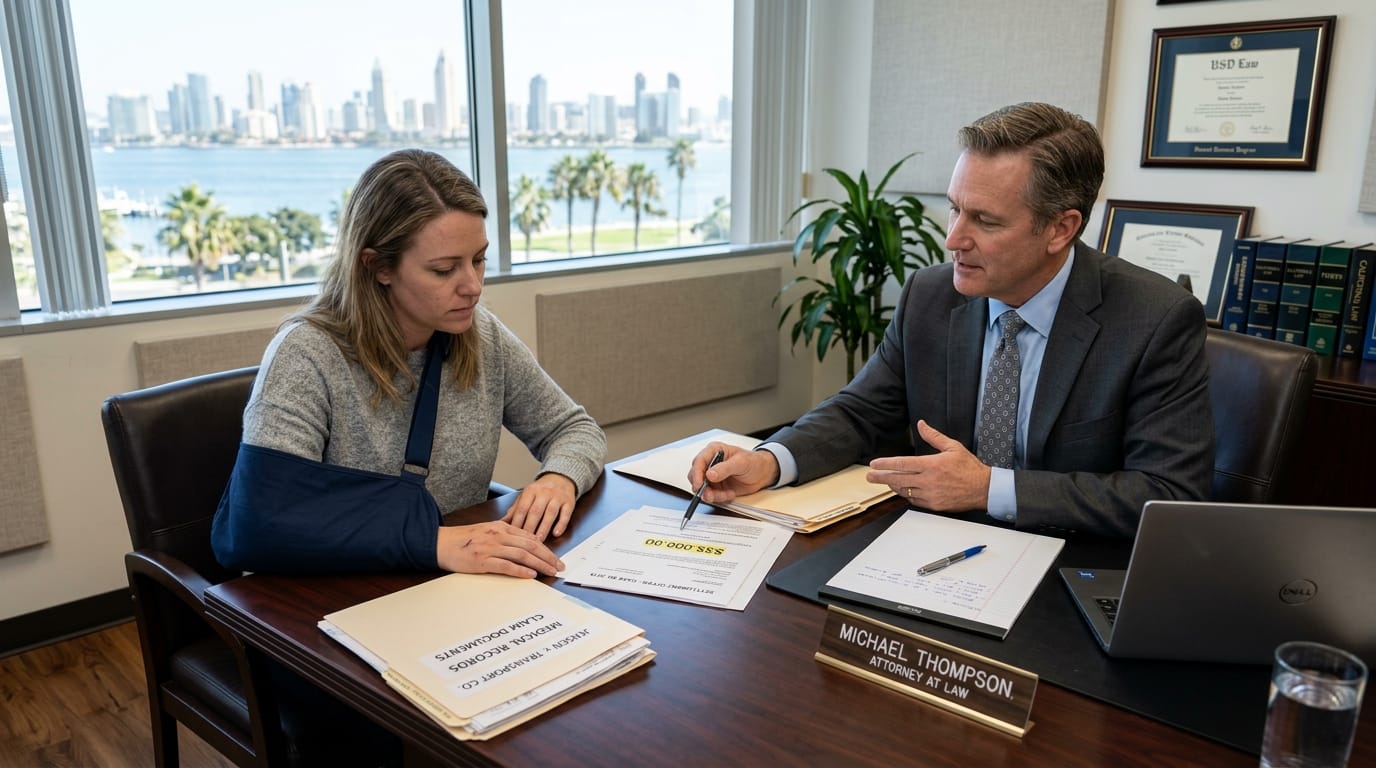
A low offer does not always mean the insurer made a final decision. Sometimes it is a negotiation tactic. Sometimes the company lacks enough evidence. Sometimes software or internal claim guidelines may have pushed the number down. Either way, a better response needs details.
Point to medical records, treatment timelines, work restrictions, pain documentation, and proof of financial losses. Explain why the offer fails to cover the real impact of the injury. If the crash involved an uninsured or underinsured driver, also review your own policy. San Diego Injury Attorney’s guide on San Diego uninsured driver accidents explains why UM/UIM coverage may matter.
AI insurance claims do not remove the insurance company’s responsibility to treat claims fairly. Technology may help organize or evaluate information, but it should not erase the human reality of an injury. Pain, medical recovery, lost income, and daily limitations still deserve a complete review.
If you were injured in San Diego, protect your claim from the beginning. Get medical care, follow treatment instructions, save every document, track symptoms, avoid rushed statements, and do not let a fast automated-looking offer decide what your case is worth. Strong evidence remains the best answer to a low claim evaluation, whether it comes from a human adjuster, software, or both.