
Teen e-bike accidents San Diego families face can become complicated very quickly. E-bikes are now common near schools, beaches, neighborhoods, bike lanes, and busy intersections. However, many riders are young, inexperienced, or using bikes that move faster than parents realize.
For injured riders, pedestrians, drivers, and families, the legal questions can be confusing. Who is responsible if a teen rider crashes into a pedestrian? What if a driver hits a minor on an e-bike? Can parents be blamed? Also, what happens if the bike was modified, defective, or too powerful for legal street use?
These questions matter because e-bike accidents often involve serious injuries. Head trauma, broken bones, dental injuries, road rash, internal injuries, and emotional distress can all follow a crash. In addition, insurance coverage may not be obvious. E-bikes do not always fit neatly into a normal car accident claim.
This guide explains how liability may work after a teen e-bike crash in San Diego. It is for general information only. It is not legal advice. If someone was hurt, speak with a qualified San Diego injury attorney about the facts of the case.
Why Teen E-Bike Accidents Are a Growing San Diego Injury Issue
Teen e-bike use has grown fast across San Diego County. Students use e-bikes for school, sports, beach trips, and short neighborhood rides. For many families, they seem practical. They reduce the need for car rides and give teens more independence.
However, speed changes the risk. A traditional bicycle and a fast e-bike do not create the same impact. Also, some young riders may not fully understand traffic laws, stopping distance, blind spots, or how quickly a crash can happen.
The City of San Diego explains that California classifies e-bikes into different classes. Class 1 and Class 2 e-bikes assist up to 20 mph. Class 3 e-bikes assist up to 28 mph and require the rider to be at least 16. Helmets are required for riders under 18, and Class 3 riders must wear helmets at any age. You can review the city’s official guidance here: City of San Diego E-Bike Laws & Safety Tips.
Because rules can vary by bike class, rider age, local ordinance, and riding location, every crash needs a careful review. A small detail may change how liability is evaluated.
Teen riders may not understand legal limits
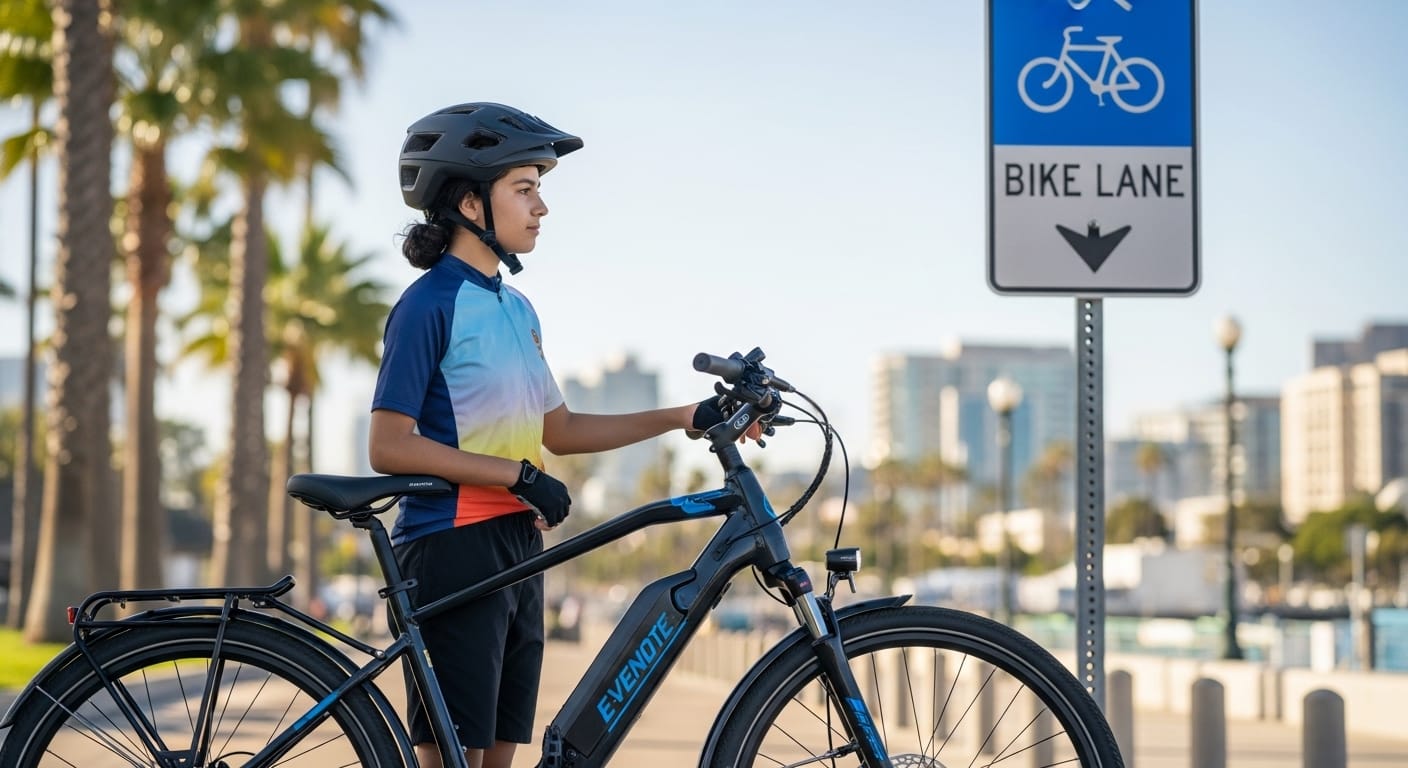
Many teens know how to ride, but they may not know the law. For example, they may not understand where e-bikes are allowed. They may also ride on sidewalks, against traffic, or through crosswalks in unsafe ways.
Some riders also confuse e-bikes with electric motorcycles. That distinction matters. If a device is too fast, lacks proper pedals, or has been modified beyond legal limits, it may not be treated like a standard e-bike.
In an injury claim, that detail can matter. A rider using an illegal or modified device may face more questions about fault. However, that does not automatically excuse a careless driver, unsafe road condition, or defective product.
Helmet use can affect injury and evidence
Helmet use is important in teen e-bike crashes. California rules require riders under 18 to wear a helmet on e-bikes. If a teen suffers a head injury and was not wearing one, insurance companies may argue that the injuries were worse because of that choice.
However, helmet issues do not erase another person’s negligence. A driver who speeds, runs a red light, fails to yield, or opens a car door into a rider’s path may still be responsible. The key question is how each person’s actions contributed to the crash and the injuries.
Modified e-bikes create extra liability questions
Modified e-bikes can create serious legal problems. Some devices are altered to go faster than allowed. Others are sold in ways that make them look like e-bikes, even though they function more like electric motorcycles.
If a modified bike causes a crash, investigators may look at who modified it, who bought it, who allowed the teen to use it, and whether the seller made misleading claims. In some cases, product liability questions may also arise.
This can connect with other injury topics on the site, including Lithium-Ion Battery Fire Injuries in San Diego, especially when batteries, chargers, or electrical defects are involved.
Who May Be Liable After a Teen E-Bike Crash?
Liability depends on facts. A teen rider may be partly at fault. A driver may be partly at fault. A parent, manufacturer, school, city, property owner, or another rider may also be involved. Therefore, it is dangerous to assume the answer too early.
California uses comparative fault. That means responsibility can be divided between multiple parties. For example, a teen rider may have entered an intersection too quickly. At the same time, a driver may have been distracted or failed to yield. In that situation, both sides may be blamed in different percentages.
Good evidence is critical. Photos, video, police reports, witness statements, medical records, bike data, app records, helmet condition, and intersection design can all matter. The sooner evidence is preserved, the better.
Drivers, riders, and pedestrians can all be involved
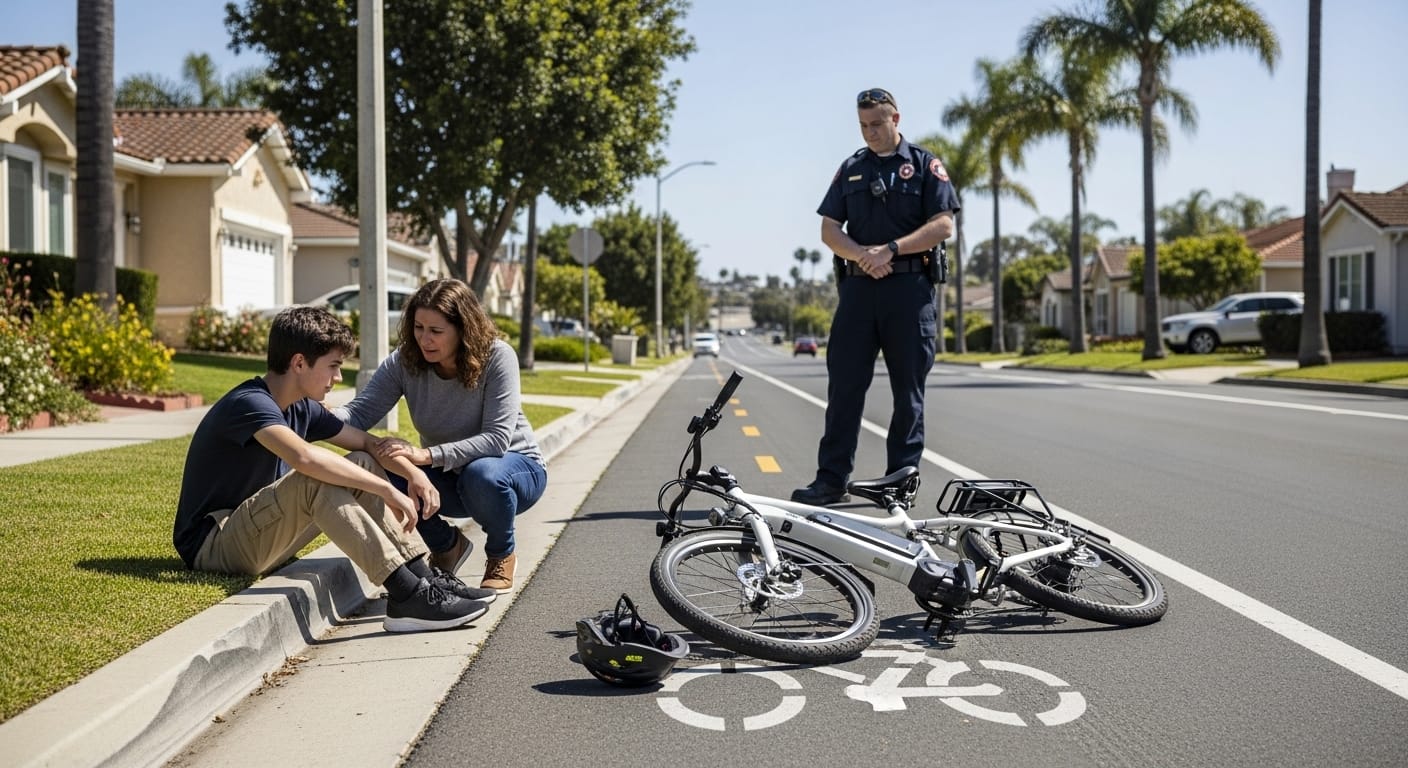
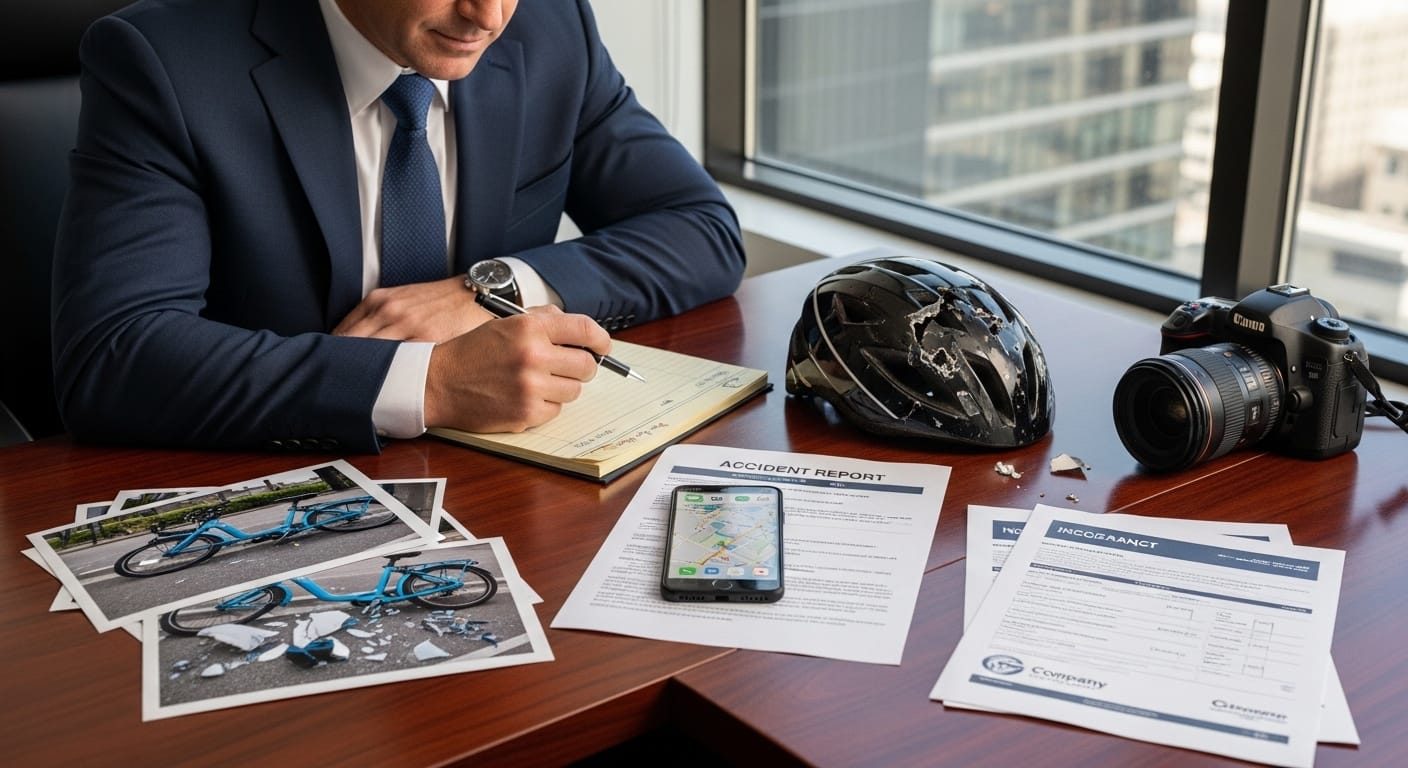
Many teen e-bike crashes involve cars. A driver may fail to see a rider in a bike lane. Also, a driver may turn right across the rider’s path. Dooring accidents can happen when someone opens a parked car door without checking.
Distracted driving is another major issue. If a driver was texting, using a navigation app, watching a screen, or adjusting a device, that evidence may support an injury claim. For more detail, read Distracted Driving Accidents in San Diego.
Pedestrians can also be hurt by teen riders. A person walking on a sidewalk, crosswalk, boardwalk, or parking lot may suffer serious injuries if struck by a fast-moving e-bike. In those cases, the rider’s speed, location, and control become very important.
Parents may face difficult questions
Parents may be asked what they knew before the crash. Did they buy the e-bike? Did they know how fast it could go? Did they allow a younger teen to use it? Did they know the teen had a history of reckless riding?
These questions do not automatically make parents liable. However, they may become part of the investigation. If a parent knowingly allowed unsafe use, the other side may try to use that fact in the claim.
Parents should also keep purchase records, manuals, app settings, repair records, and communications with sellers. These documents may help show what the family knew about the bike and how it was used.
Product defects, schools, and unsafe roads may matter
Not every e-bike crash is caused only by rider behavior. Sometimes the bike itself may fail. Brakes may malfunction. Tires may be defective. A battery or throttle may behave unpredictably. In those cases, a manufacturer, seller, repair shop, or parts supplier may be investigated.
Schools and private properties may also be relevant. If a crash happens on campus, in a parking lot, or near a poorly managed pickup area, the layout and supervision may matter. However, claims involving public entities or schools often have strict deadlines. Families should not wait too long to ask questions.
Unsafe roads can also contribute. Potholes, missing signs, poor lighting, dangerous intersections, blocked bike lanes, and confusing markings can all play a role. If a public agency may be involved, special claim rules can apply.
Insurance coverage is often the hardest issue
Insurance is one of the most frustrating parts of teen e-bike claims. E-bikes usually do not require registration or auto insurance. As a result, injured people may not know where to recover compensation.
Possible coverage may include auto insurance, homeowners insurance, renters insurance, umbrella policies, uninsured motorist coverage, product liability insurance, or commercial policies. However, exclusions may apply. That is why policy review is essential.
For related issues involving electric mobility crashes, see E-Bike Accidents in San Diego and E-Scooter Accidents in San Diego.
After a crash, families should act carefully. Get medical care first. Then report the incident when appropriate. Take photos of the scene, the bike, injuries, traffic controls, lighting, skid marks, helmet damage, and nearby cameras. Also, save the e-bike before repairs or disposal.
Do not rush into recorded statements. Insurance companies may ask questions that seem simple but are designed to reduce the claim. A statement about speed, helmet use, lane position, or distraction can affect fault later.
Pedestrians and drivers should also preserve evidence. If a teen rider caused the crash, try to identify the rider, parents, bike model, and any witnesses. If the rider leaves, camera footage from homes, businesses, buses, or nearby vehicles may become important.
Teen e-bike accidents San Diego families deal with are not simple bicycle mishaps anymore. These cases can involve traffic law, minor riders, parental knowledge, product defects, insurance gaps, and serious injuries. Because of that, every claim deserves a careful investigation.
The safest path is to document everything early, avoid guessing about fault, and get legal guidance before accepting blame or settlement money. E-bikes may be new technology, but the consequences of a crash can last for years.