
Heat illness claims are getting more attention in California, and San Diego workers should not ignore that trend. Many people still assume heat illness only happens on farms, road crews, and construction sites. That is too narrow. In 2026, warehouse workers, restaurant staff, manufacturing employees, laundry workers, kitchen crews, and other indoor employees may also face real heat-related risks on the job.
That is why San Diego workplace heat illness claims 2026 is a strong topic for your site right now. It fits your existing workplace-injury focus and gives you a current California angle that is practical for real workers. If someone collapses, becomes dizzy, vomits, blacks out, or suffers worsening medical problems after working in excessive heat, the case may start as workers’ compensation. But it may not end as a simple claim file and a few medical visits.
In many cases, the first legal question is straightforward. Was the illness job-related? But after that, the case can get more complicated. Was the worker given water? Were cool-down breaks available? Did supervisors ignore warning signs? Did the employer have a proper heat illness prevention plan? Did the worker move between indoor and outdoor work areas? Those details matter because they can affect both benefits and how the case gets evaluated.
Why San Diego Workplace Heat Illness Claims 2026 Matter More Now
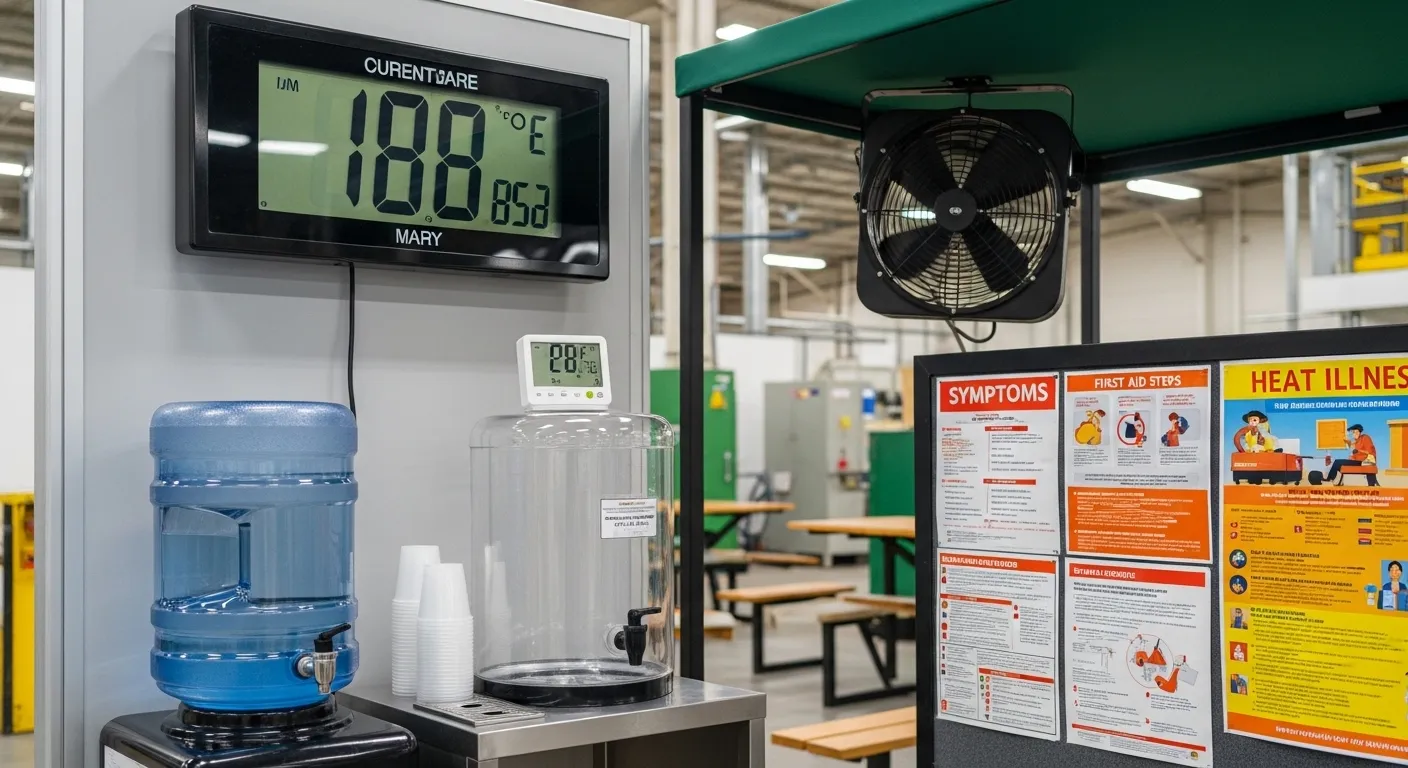
Heat illness is not just discomfort. It can become a serious medical event fast. Early symptoms may include cramps, headache, weakness, nausea, dizziness, confusion, or heavy sweating. More severe cases can involve fainting, collapse, or heat stroke. For workers, that can mean emergency treatment, lost wages, missed shifts, and long-term health problems if the exposure was severe enough.
What makes 2026 different is that California now has a clearer indoor heat rule in place. That changes the conversation. Workers and employers can no longer treat indoor heat like a vague common-sense issue. There is now a more defined compliance framework, and that matters when a claim later turns into a dispute over what the employer knew and what the employer failed to do.
Indoor heat is now a real workplace safety issue, not a side topic
A lot of workers still hear “heat illness” and think only of outdoor labor. That is not how California treats the issue now. Indoor heat can matter too, especially in warehouses, kitchens, factories, and other hot work environments. Some workers move between indoor and outdoor areas during the same shift, which can make the exposure pattern even harder on the body.
Why indoor work does not mean low risk
Indoor heat can build up fast when the work area has poor ventilation, heat-producing equipment, limited airflow, or physically demanding tasks. A large warehouse may trap heat. A commercial kitchen may expose workers to ovens, grills, steam, and long shifts. A manufacturing area may combine machinery heat with protective gear and limited recovery time. None of that is minor when the worker already feels sick, dehydrated, or overworked.
Why California’s heat rules change how these claims are viewed
Once a state creates clear safety requirements, those requirements start showing up in injury discussions. That does not mean every violation becomes an automatic payout. It does mean the facts become easier to organize. If the worker says there was no cool-down area, no training, no meaningful response, and no real prevention plan, those details now land in a more concrete legal setting than they did a few years ago.
If you want to support this post with an internal workplace angle, tie it to your Workplace Accidents section. That helps keep the article within your existing on-the-job injury cluster.
Workers’ compensation is usually the first path, but not always the only issue
Most job-related heat illness cases in California begin with workers’ compensation. That is the standard starting point. The worker reports the condition, seeks treatment, and starts the claim process. In many cases, that is the main track for medical care and disability benefits. Still, some workers later learn that the case raises broader safety questions too.
Why workers’ comp usually comes first
Workers’ comp exists to handle job-related injuries and illnesses without forcing the worker to prove a full civil negligence case first. That matters because a worker dealing with heat illness may need treatment right away, not after months of argument. A reported job-related illness can trigger medical care, temporary disability issues, and claim handling that starts much sooner than a lawsuit would.
This is also why reporting matters. Workers who wait too long create problems for themselves. If symptoms started at work or worsened because of work heat exposure, the worker should report that quickly and clearly. For broader claim basics, you can link readers to your San Diego Legal Resources section and your main blog.
When a Heat Illness Case May Raise Bigger Employer-Safety Questions
Not every heat illness case goes beyond workers’ comp. Plenty do not. But some facts make people look more closely at employer conduct. That can happen when warnings were ignored, workers were pushed through dangerous conditions, or the same unsafe pattern affected multiple employees. The more preventable the event looks, the more likely the case raises questions beyond “Was this work-related?”
Red flags that may turn a routine claim into a more serious safety issue

Some cases stand out immediately. Maybe several workers complained about heat before someone collapsed. Maybe there was no meaningful access to water. Maybe the break area was not actually cool. Maybe the employer knew the space ran hot every summer and still failed to plan for it. Maybe the worker had to keep moving between extreme heat zones without proper recovery time.
What facts often make these cases look worse for the employer
Patterns matter. Repeated complaints, ignored symptoms, missing training, poor supervision, lack of water, or no practical cool-down procedure can all make the employer’s conduct look more serious. So can pressure to “push through it” when a worker already shows signs of distress. If the illness happened after obvious warning signs, the defense story gets weaker.
Documentation matters here too. Incident reports, texts, shift records, temperature logs, witness statements, and emergency-response timing can all shape the case. That is the same reason medical proof matters in other injury claims. If you want a supporting internal link, send readers to your broader blog archive through the San Diego Injury Attorney blog so the heat illness post stays connected to your general evidence-and-claims content.
When the case may involve more than ordinary claim handling
Some workers hear “workers’ comp” and think that ends every legal question. Not always. California law still recognizes situations involving serious and willful misconduct by the employer, and separate petitions exist in that area. Some work injuries also involve a third party rather than the employer alone, such as a negligent property owner, equipment company, or contractor. In still other situations, problems can become more serious if the employer was illegally uninsured. The right legal path depends on the facts, so workers should not assume the claim is limited to one box from day one.
What injured workers should do right after job-related heat illness
The first priority is health, not paperwork. If the worker has severe symptoms, emergency care comes first. After that, the next priority is preserving the job connection. A worker should report the incident or illness promptly, describe the symptoms clearly, and explain why the work conditions mattered. Heat illness cases often get harder when the employer later claims the worker got sick for personal reasons or outside the job.
Workers should also preserve details that people forget fast. Write down the time, location, tasks, indoor or outdoor conditions, access to water, breaks, supervisor response, and names of coworkers who saw what happened. Save texts, schedules, photos, and any written complaint or incident form. If several people struggled in the same conditions, that pattern can matter a lot.
Deadlines also matter. Waiting can hurt the claim. So can vague reporting. A worker does not need to sound like a lawyer, but the report should make one thing clear: the illness happened because of work conditions or got worse because of work conditions. That basic link is critical.
In the end, San Diego workplace heat illness claims 2026 are not just about whether a worker felt overheated on one shift. They are about whether the job conditions caused a real illness and whether the employer handled known risks the right way. For an outside source, link to Cal/OSHA’s Indoor Heat Illness Prevention page. It gives readers a clear view of what California expects in indoor workplaces. That context can help injured workers understand why a heat illness case may be more serious than it first looks.