
A San Diego rideshare accident claim can become more complicated than a normal car crash because the most important question is not always who caused the collision. In many Uber or Lyft crashes, the first major issue is what the rideshare driver was doing inside the app at the exact time of impact. Was the driver offline? Logged in and waiting for a ride? On the way to pick up a passenger? Or already transporting a passenger?
That app status matters because rideshare insurance is not one simple policy that applies the same way all the time. California treats transportation network company, or TNC, insurance in different periods. The coverage question can change depending on whether the driver had accepted a ride request, whether a passenger was inside the vehicle, and whether the trip had already ended.
For injured passengers, pedestrians, cyclists, scooter riders, and other drivers, this can create confusion fast. One insurance company may blame another. The rideshare company may ask for app details. The driver may say they were working, while the insurer may question whether the app was active. Meanwhile, the injured person is dealing with medical bills, missed work, pain, and repair issues.
This article is for educational purposes only and is not legal advice. It explains why app status matters, what evidence passengers should save, and how injured people can protect a San Diego rideshare accident claim before important digital records disappear.
Why App Status Can Control a San Diego Rideshare Accident Claim
In an ordinary crash, the injured person usually starts with the at-fault driver’s personal auto insurance. Rideshare crashes are different because the driver may be using a personal vehicle for commercial app-based transportation. That creates layered insurance questions involving the driver, the rideshare company, and sometimes another negligent motorist.
California’s rideshare insurance framework separates coverage into periods. The California Public Utilities Commission explains that TNC services are generally divided into app-based phases, including when the app is open and the driver is waiting for a match, when a match has been accepted but the passenger has not yet entered the vehicle, and when the passenger is inside the vehicle until exit. You can review the CPUC’s official overview here: CPUC Insurance Requirements for TNCs.
The reason this matters is simple. The available policy, the limits, and the responsible insurer may depend on the driver’s exact app status. That is why screenshots, trip receipts, driver details, and app records can become critical evidence.
Period questions can decide which insurance policy applies
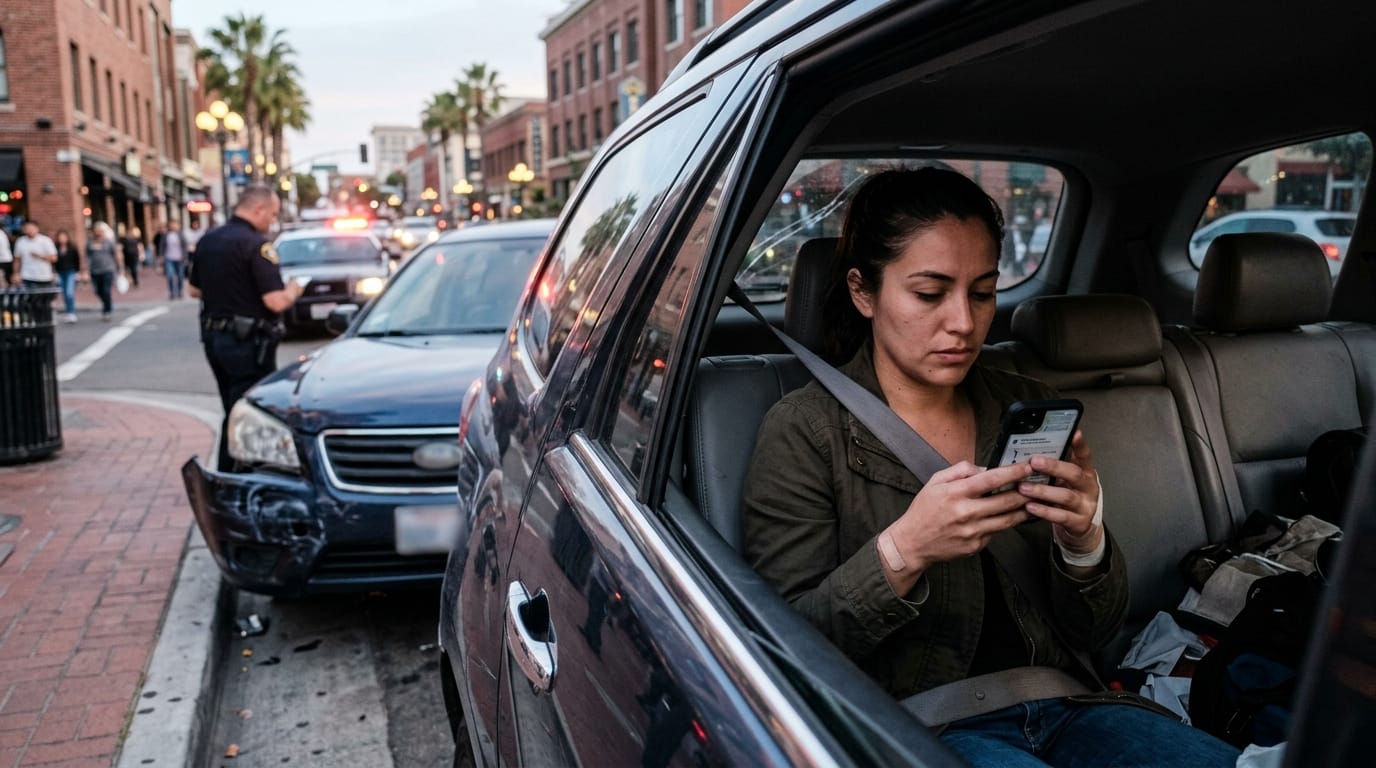
A rideshare crash investigation should identify the driver’s status at the exact time of the collision. A few minutes can matter. A driver who was offline may be treated differently from a driver who was logged in and waiting for a ride. A driver who had accepted a ride request may be treated differently from one who was simply available. Driver carrying a passenger may trigger still another insurance analysis.
This is why injured people should not assume the insurance issue is obvious. A driver may say one thing at the scene, but app logs may show something else. A passenger may remember being inside the ride, but the trip record may show whether the ride had started, whether the route was active, and whether the driver had ended the trip before or after the crash.
Your existing article, San Diego Rideshare Accidents: What to Do After an Uber or Lyft Crash, is a useful starting point for general crash steps. This guide goes further by focusing on the insurance and evidence problems that often appear after the initial report.
Driver offline means personal insurance may be the starting point
If the rideshare driver was not logged into the app, the claim may begin like a regular private-driver crash. In that situation, the driver’s personal auto insurance may be the first policy reviewed. However, disputes can still happen if the driver had recently logged out, was between trips, or was using the vehicle for other app-related activity.
Victims should avoid guessing. Instead, collect the driver’s personal insurance, license plate, driver profile details, vehicle description, and any information shown inside the app. If another vehicle caused the crash, get that driver’s insurance too. More than one policy may need to be reviewed.
Logged in but waiting for a ride can create coverage disputes
When a rideshare driver is logged into the app but has not accepted a ride, the case can become more technical. This period is often disputed because the driver is available for rides, but not yet transporting anyone. The driver may be interacting with navigation, waiting for a request, moving toward a busy area, or watching the app while driving.
For injured people, this is where digital evidence becomes especially important. Phone use, app activity, GPS location, trip history, and driver statements may help show whether the driver was actively using the rideshare platform. If the crash involved distraction, your related guide on Distracted Driving Accidents in San Diego can support this topic because rideshare cases often involve phone, app, and screen evidence.
Accepted rides and passenger trips need careful documentation
Once a driver accepts a ride request or begins transporting a passenger, the insurance analysis may change significantly. However, passengers should not assume the rideshare company will automatically accept responsibility or pay the claim quickly. Insurance companies may still review the trip timeline, driver conduct, third-party fault, medical proof, and whether the claimed injuries match the crash.
A passenger inside the vehicle should save everything connected to the trip. That includes the ride receipt, route map, driver name, vehicle plate, pickup time, drop-off details, screenshots of the app, messages with the driver, and any post-crash communication from Uber, Lyft, or the insurer. If the driver cancels or ends the ride after the crash, that detail should also be preserved.
Passenger screenshots can become powerful evidence
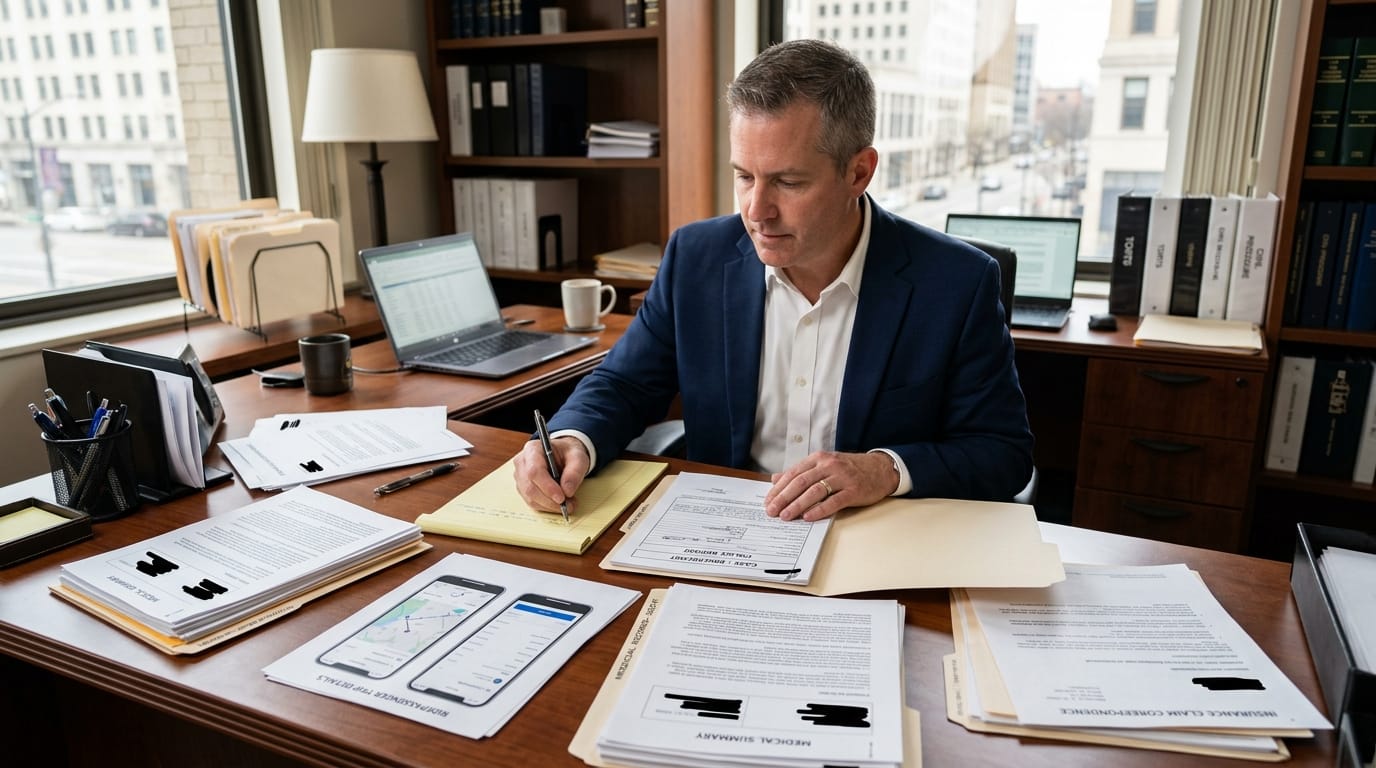
Passengers often have access to evidence that other injured people do not. The app may show the driver’s name, vehicle, route, time, fare, trip status, and messages. Those details can help confirm that the ride was active. They may also help identify the right insurer if the driver or company later disputes the timeline.
Take screenshots before the app screen changes. Save the receipt email. Download trip details if available. Keep any messages from customer support. If there were other passengers in the vehicle, get their names and contact information. If the crash happened near a hotel, airport, restaurant, stadium, bar, school, or transit stop, nearby video may also help confirm the sequence of events.
Do not rely only on the rideshare company’s report process
Reporting the crash inside the app is useful, but it is not enough. The app report is usually designed for the platform’s internal process. It is not a substitute for medical care, a police report, independent photos, witness information, or insurance notice.
If anyone is injured, call 911 when appropriate and request medical help. Take photos of vehicle positions, damage, airbags, traffic signals, road conditions, skid marks, rideshare decals, and visible injuries. Get the police report number. If the rideshare driver says the company will “handle everything,” still preserve your own evidence. Your claim should not depend only on what the company chooses to document.
Evidence and Insurance Issues That Can Make or Break the Claim
Rideshare accident claims often become evidence battles. The injured person may know what happened, but the insurance company will ask for proof. The proof may include medical records, police reports, app screenshots, vehicle photos, witness statements, trip data, phone records, dashcam footage, and damage estimates.
Insurance companies may also use software and claim-scoring tools to evaluate treatment timelines, medical billing, crash severity, and settlement value. That does not mean every review is unfair, but it does mean injured people should document their losses clearly. For more background, read AI Insurance Claim Reviews in San Diego. That article explains why claim documentation matters even more when insurers use automated or data-assisted review systems.
Medical proof is just as important as app proof. A passenger may have strong evidence that the ride was active, but if treatment is delayed or records are incomplete, the insurer may still argue that the injuries were minor, unrelated, or exaggerated. Get medical care early, follow treatment instructions, and keep copies of every bill, diagnosis, imaging result, prescription, therapy note, and work restriction.
What injured riders should preserve after the crash
A strong San Diego rideshare accident claim should be organized from the start. Save the trip receipt, screenshots, driver profile, vehicle information, insurance details, police report number, photos, videos, witness contacts, medical records, and every message from the rideshare company or insurer. If you paid through the app, keep payment records too.
Do not delete the app, cancel the account, or rely on memory. Small details may matter later, including the exact pickup address, route, crash location, and whether the driver was following GPS. If your phone was damaged in the crash, back up your account and preserve emails connected to the ride.
Uninsured and underinsured motorist coverage may also become relevant, especially if another driver caused the crash or if coverage is disputed. For related background, read San Diego Uninsured Driver Accident 2026: How UM/UIM Claims Work After California’s Insurance Change.
Finally, watch the deadlines. California injury claims have strict time limits, and evidence can disappear long before a filing deadline arrives. A rideshare company, insurer, nearby business, or third-party driver may control evidence you cannot access later without a formal request. Acting early helps protect the claim.
A San Diego rideshare accident claim in 2026 is not just a car crash claim with an app name attached. It is a digital-evidence case, an insurance-coverage case, and a medical-documentation case at the same time. The strongest claims are built by proving what the driver was doing, what insurance applied, how the crash happened, and how the injuries affected the victim’s life.
If you were injured in an Uber or Lyft crash in San Diego, get medical care, report the crash, preserve app evidence, collect insurance information, and review the coverage issues before giving broad statements to any insurer. The faster you protect the evidence, the harder it becomes for anyone to rewrite the timeline later.