
A San Diego hit-and-run pedestrian injury claim can become one of the most stressful accident cases a victim or family will face. When a driver hits someone walking, standing near a bus stop, crossing the street, or using a sidewalk area, the injuries can be severe. When that driver leaves the scene, the case becomes even harder. The injured person may be dealing with emergency care, pain, lost income, and fear while also wondering who will pay for the damage if the driver is not found.
Hit-and-run pedestrian crashes are especially concerning in busy parts of San Diego where people walk near transit stops, nightlife areas, beach communities, schools, shopping centers, and high-traffic intersections. A pedestrian has little protection against a moving vehicle. Even a lower-speed crash can cause head injuries, broken bones, spinal trauma, internal injuries, and long-term emotional distress.
The legal issue is not only whether the driver was careless. Investigators also need to know whether the crash happened in a crosswalk, near a bus shelter, beside a curb, close to a rideshare pickup zone, or in an area with poor lighting or blocked visibility. These details can affect fault, insurance coverage, and whether other parties may need to be reviewed.
This article is for educational purposes only and is not legal advice. However, it can help injured pedestrians and families understand the evidence that matters after a hit-and-run, why uninsured motorist coverage may become important, and why deadlines should be reviewed quickly.
Why Hit-and-Run Pedestrian Claims Are Different From Ordinary Car Accident Cases
In a typical car accident claim, the injured person can usually identify the other driver, exchange insurance information, and let the insurance companies begin their process. A hit-and-run is different. The at-fault driver may be unknown, uninsured, driving a stolen vehicle, using someone else’s car, or trying to avoid arrest. This creates immediate problems for the victim.
First, there may be no obvious insurance company to contact. Second, the police investigation may take time. Third, important scene evidence can disappear quickly. Fourth, the victim’s own insurance policy may become important even though the victim was walking and not driving at the time of the crash.
This is why a San Diego hit-and-run pedestrian injury claim should be treated seriously from the beginning. The goal is not only to prove that the fleeing driver caused the crash. The goal is also to preserve every possible source of recovery before evidence disappears.
Bus stop and sidewalk crashes may involve more than one safety issue
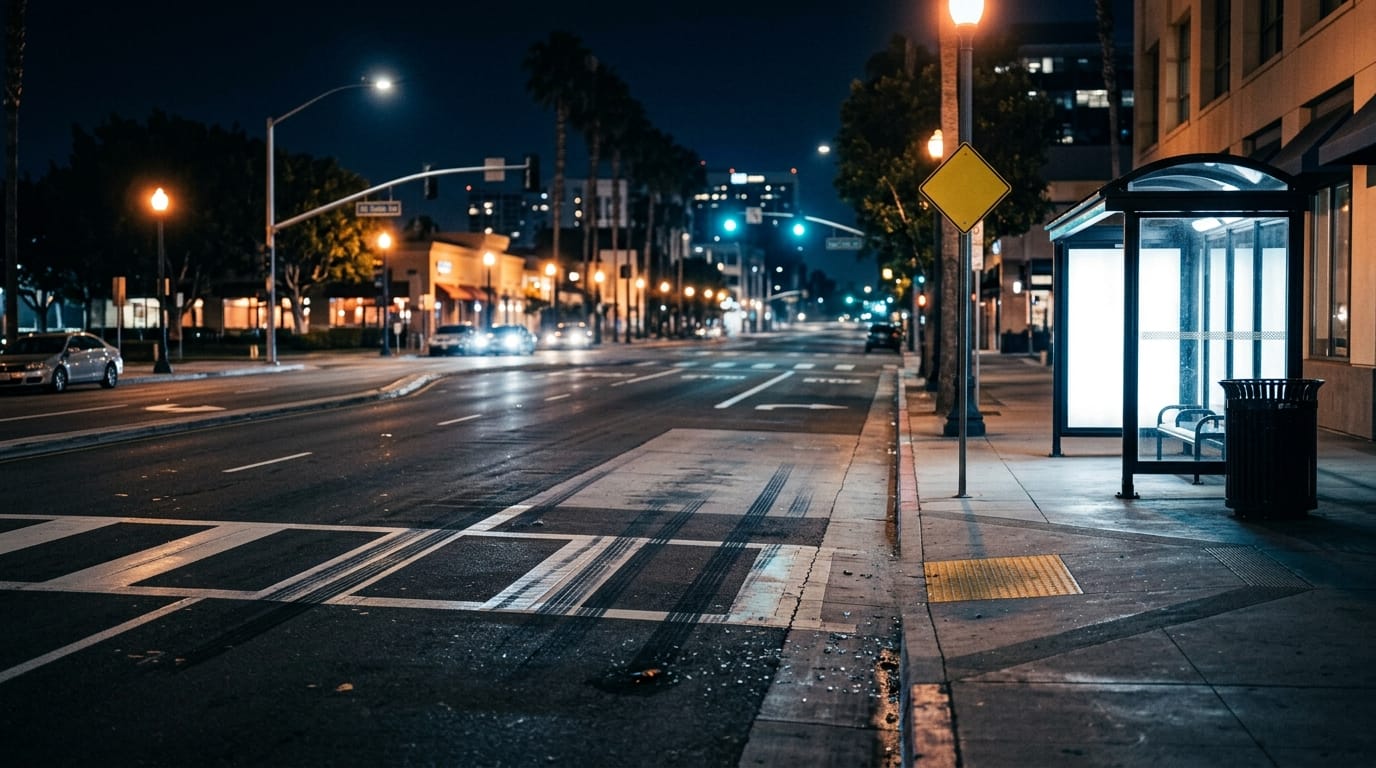
A pedestrian does not have to be inside a marked crosswalk to have a valid injury claim. Some of the most serious crashes happen near bus stops, sidewalks, parking lots, curb areas, driveways, and transit corridors. If a vehicle leaves the roadway, jumps a curb, hits a bus shelter, or strikes someone waiting near public transit, investigators should look at more than the driver’s conduct alone.
For example, the case may involve speeding, distraction, unsafe turning, impairment, poor road design, inadequate lighting, blocked sightlines, or dangerous curbside activity. If the driver fled, that conduct can support the argument that the driver knew something was wrong. Still, the claim should be built on evidence, not assumptions.
For broader background on pedestrian safety claims, read Pedestrian Accidents in San Diego: How New Safety Initiatives Could Impact Your Claim. That guide explains how crosswalks, safety projects, and local traffic conditions may affect injury cases.
Call 911 and preserve the police report number
After any hit-and-run pedestrian crash, emergency response should come first. Call 911, request medical help, and make sure law enforcement creates a report. If the victim is unable to speak, a family member, witness, or nearby business owner may need to help preserve information.
The police report number matters because insurance companies often request it before reviewing a claim. It may also help connect the case to later updates if the driver is found. Victims should keep the incident number, responding agency information, officer name when available, and any instructions given at the scene.
Look for video before it is overwritten
Video can be the difference between a weak claim and a strong claim. Nearby businesses, apartment buildings, buses, rideshare vehicles, dashcams, traffic cameras, doorbell cameras, and parking lot systems may have captured the crash or the fleeing vehicle. The problem is that many systems overwrite footage within days or even hours.
Useful footage does not always show the impact clearly. A camera may show the vehicle before or after the crash, the direction it fled, a partial plate, vehicle color, body damage, or witnesses who stopped to help. That can still be valuable. In a hit-and-run, small details can help identify the driver or support an uninsured motorist claim later.
Crosswalk visibility and daylighting may affect fault
Many pedestrian crashes are blamed on the person walking, especially when the driver is not available to give a statement. Insurance companies may argue the pedestrian crossed suddenly, was outside the crosswalk, wore dark clothing, or failed to watch traffic. These arguments are common, but they should not end the investigation.
Visibility can be a major issue. Parked cars, delivery vehicles, large SUVs, buses, signs, overgrown landscaping, and poor lighting can make it harder for drivers and pedestrians to see each other. California’s daylighting rules have also brought more attention to crosswalk visibility because vehicles parked too close to corners can create serious sightline problems.
If the crash happened near an intersection, crosswalk, bus stop, or corner, review San Diego Daylighting Law Accident Claims in 2026. That article explains how blocked sightlines, parking near crosswalks, and scene photos may affect fault discussions.
Scene photos should show the pedestrian’s view and the driver’s view
Photos should not only show injuries or vehicle debris. They should also show what each side could see. Take photos from the pedestrian’s approach, the driver’s approach, the crosswalk, the curb, the bus stop, and the nearest traffic control device. Include lighting, signage, lane markings, parked vehicles, skid marks, debris, road surface, and nearby cameras.
If possible, take photos at the same time of day as the crash. A street that looks clear at noon may be dark and confusing at night. A bus stop that looks safe from one angle may have poor visibility from another. These details can help counter unfair blame.
Insurance, Evidence, and Deadlines After a San Diego Hit-and-Run
When the fleeing driver is not identified, the injured person may still have options. One of the most important areas to review is uninsured motorist coverage, often called UM coverage. Many people think auto insurance only helps when they are inside their own vehicle. However, depending on the policy, UM coverage may apply when an insured person is hit as a pedestrian by an unidentified or uninsured driver.
This does not mean every case is automatically covered. Policy language matters. Reporting requirements matter. Medical proof matters. The insurance company may still challenge the claim, the injuries, or the facts of the crash. That is why the victim should keep careful records and avoid giving broad recorded statements without understanding the claim first.
For official local safety context, the City of San Diego’s Vision Zero program explains the city’s goal of eliminating traffic-related deaths and severe injuries. That does not prove liability in any single case, but it shows why pedestrian safety, crosswalk visibility, speed, and road design remain important issues in San Diego.
What evidence helps a hit-and-run pedestrian injury claim?
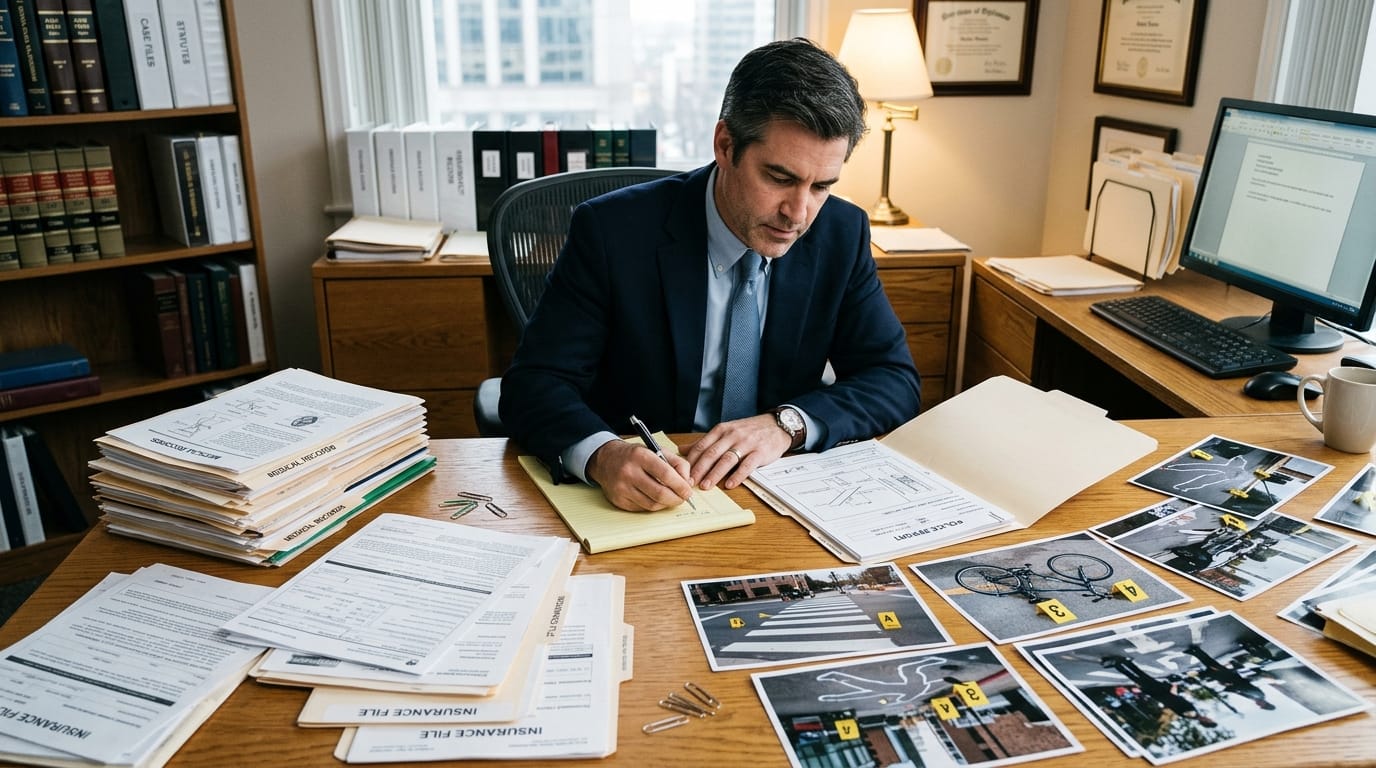
The strongest evidence usually comes from multiple sources. A victim should keep medical records, ambulance records, photos, witness information, police report details, insurance letters, and notes about symptoms. If there was a bus stop, business, school, hotel, bar, restaurant, or apartment complex nearby, ask quickly about surveillance footage.
Witnesses can be especially important. A witness may remember the vehicle model, color, direction, driver behavior, or whether the pedestrian was visible. Another witness may confirm that the injured person was standing safely, crossing with the signal, or waiting at a bus stop when the crash happened.
Medical documentation is equally important. Delayed treatment gives the insurance company room to argue that the injury was not serious or was caused by something else. Follow-up care, imaging results, specialist visits, therapy notes, and work restrictions can all help connect the crash to the damages claimed.
Review deadlines early, especially if public property may be involved
California injury claims have strict deadlines. If the claim is against a private driver, the general personal injury deadline may apply. However, if a government entity may be involved because of a dangerous road condition, public transit issue, government vehicle, traffic signal problem, or unsafe public property, shorter claim deadlines may apply.
For general deadline background, read Understanding California’s Statute of Limitations for Personal Injury Claims. For practical first steps after any crash, review What to Do After a Car Accident in San Diego: 7 Steps to Protect Your Injury Claim. Even though a pedestrian case is different from a two-car crash, many evidence-preservation steps are similar.
A San Diego hit-and-run pedestrian injury claim is not hopeless just because the driver fled. The case may involve police investigation, uninsured motorist coverage, video evidence, witness statements, medical proof, and possibly roadway-safety questions. The key is to act quickly, preserve evidence, and avoid letting the insurance company control the story before the facts are complete.
If you or a loved one was injured in a hit-and-run pedestrian crash in San Diego, get medical care first, report the crash, document everything you can, and review your legal and insurance options as early as possible.