
A San Diego heat illness injury claim does not always involve workers’ comp. Many people connect heat illness with outdoor workers, construction crews, landscapers, warehouse staff, or kitchen employees. That view is too limited. In San Diego, heat-related injuries can also happen at apartments, rental homes, schools, sports events, hotels, senior facilities, public spaces, and businesses.
Extreme heat can become dangerous fast. A person may feel tired at first. Then dizziness, confusion, nausea, or fainting may follow. In severe cases, heat stroke can cause organ damage, brain injury, or death.
This issue matters more in 2026 because San Diego continues to face serious heat risks. According to San Diego County’s 2024 Annual Excessive Heat Report, the county recorded nine heat events in 2024. Those events included 55 heat-event days. The report also counted 178 heat-related prehospital calls on heat-event days. Most of those patients needed transport to an emergency department. You can review the county report here: San Diego County 2024 Annual Excessive Heat Report.
For injury victims, the legal issue is not only the weather. The bigger question is whether someone failed to act with reasonable care. A landlord, school, event organizer, business owner, or property manager may have duties during dangerous heat. When they ignore known risks, victims may have a valid injury claim.
Why San Diego Heat Illness Injury Claims Are Becoming More Important
Heat illness does not always look serious at the beginning. Early symptoms may include thirst, weakness, headache, heavy sweating, cramps, or lightheadedness. These signs can get worse quickly. Confusion, vomiting, fainting, rapid heartbeat, and loss of consciousness may point to a medical emergency.
San Diego County warns residents to take heat stroke seriously. The county advises people to call 911 when severe symptoms appear. You can find public safety guidance on the county’s Extreme Heat resources.
Some people face higher risk than others. Children may not explain symptoms clearly. Older adults may struggle to cool down. People with disabilities may need extra help. Certain medications and health conditions can also increase danger. Athletes, outdoor guests, tenants, and visitors may also face risk when they lack shade, water, or cooling access.
A personal injury claim usually depends on four key points. Someone owed a duty of care. That person or business failed to meet that duty. The failure caused harm. The victim suffered damages. Hot weather alone does not prove liability. Still, a claim may become stronger when a responsible party knew about the danger and failed to respond.
Heat illness is not only an outdoor worker issue
Your site already has a helpful article about San Diego workplace heat illness claims in 2026. This article covers a different group. It focuses on people who were not working when the injury happened.
That group may include tenants, hotel guests, students, event attendees, customers, senior residents, sports players, and public visitors. Each situation needs a fact-specific review. Still, the same core question applies. Did someone ignore a foreseeable heat risk?
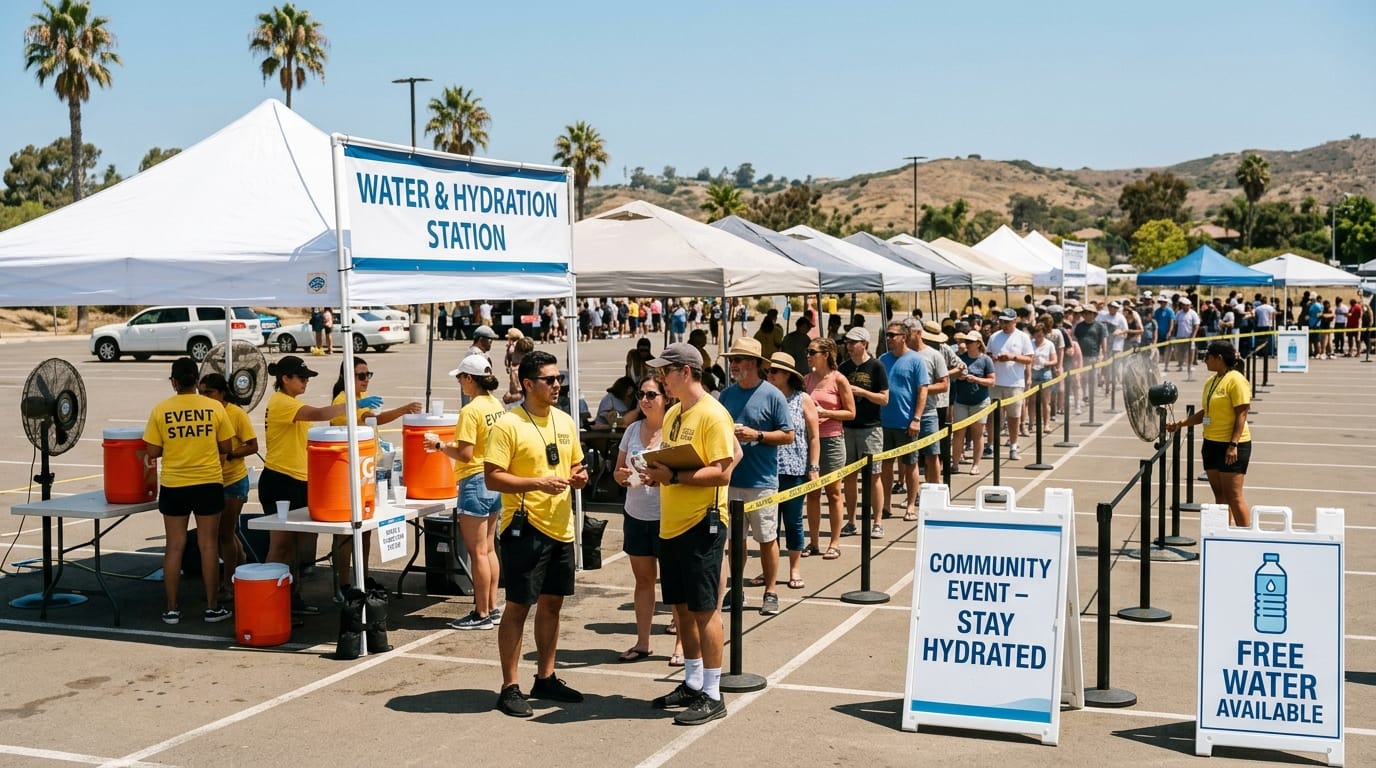
A tenant may suffer heat illness inside a rental unit with broken ventilation. A student athlete may collapse after adults push practice during unsafe conditions. An event guest may overheat after standing in long lines without shade. A customer may get sick inside a hot business with poor airflow. These are not normal workplace cases, but they may still involve legal responsibility.
Rentals, apartments, and senior living spaces
Rental-related heat claims can be difficult. California law does not turn every uncomfortable apartment into an injury case. A hot room alone may not prove negligence. The facts need to show more.
A landlord or property manager may face liability when they ignore repeated complaints. Broken ventilation, unsafe building conditions, disabled cooling systems, and poor maintenance can matter. Locked common areas may also become important if residents had no safe place to cool down.
Senior living facilities require even more caution. Many residents depend on staff for daily support. Some also have medical conditions that increase heat risk. Facility staff should monitor hydration, indoor temperatures, warning signs, and emergency symptoms. When staff ignore confusion, weakness, fainting, or distress, the case can become serious.
Schools, youth sports, and public activities
Children and teens may not notice heat illness early. Some try to keep playing or practicing because they do not want to stop. Others may hide symptoms to avoid embarrassment. Coaches, teachers, camp leaders, and supervisors should not rely on children to self-report every warning sign.
Schools and youth organizations should review weather conditions before outdoor activities. They should also provide water, shade, rest breaks, and emergency plans. Staff should adjust practice schedules when heat creates clear danger. Ignoring severe symptoms can create major legal problems.
Field trips, camps, sports tournaments, and school events can all raise heat safety issues. The risk grows when children wait outside for long periods. It also increases when adults fail to check on students during hot weather.
When premises liability may apply to heat-related injuries

A San Diego heat illness injury claim may involve premises liability. This area of law covers unsafe property conditions. Many people connect it with falls, broken stairs, spills, or poor lighting. However, unsafe heat conditions can also matter when a property owner fails to act reasonably.
An outdoor venue may know guests will stand in direct sun for hours. A hotel may know the cooling system does not work. A business may know customers are waiting in a hot indoor space. A property manager may know tenants have reported unsafe heat. These facts can help show notice.
Notice matters because the responsible party must have known, or should have known, about the danger. When heat alerts, complaints, broken equipment, or prior incidents exist, the case may become stronger.
For related property-liability guidance, connect this article to your San Diego slip and fall accident resources. Both topics involve unsafe property conditions, evidence, notice, and reasonable care.
Foreseeability is the key issue
Foreseeability means someone could reasonably predict the danger. Heat-related injuries often become foreseeable during heat events, advisories, crowded events, or repeated complaints. A business or property owner cannot control the weather. However, they can control how they respond to known heat risks.
Insurance companies may argue that heat is natural. They may say nobody caused the weather. That argument misses the point. The claim usually focuses on preventable harm. Did the responsible party provide warnings? Did they offer water, shade, cooling areas, or schedule changes? Did staff respond quickly when symptoms appeared?
Small safety steps can prevent major injuries. A venue can add shade tents. A school can move practice earlier. A property manager can repair cooling systems. A business can stop customers from waiting in unsafe heat. When people ignore simple precautions, victims may have stronger claims.
How to Protect a San Diego Heat Illness Injury Claim
Heat injury claims need strong proof. Unlike a broken bone or visible wound, heat illness may not leave obvious marks. Medical records, witness statements, weather data, photos, and incident reports can make a major difference.
Get medical care right away after serious heat symptoms. Call 911 for confusion, fainting, vomiting, loss of consciousness, or severe weakness. After the emergency, start saving evidence. Keep hospital records, ambulance reports, photos, emails, text messages, maintenance requests, event tickets, and weather alerts.
Ask witnesses for names and contact information. If the injury happened at a business, event, school, hotel, or rental property, request an incident report. Also write down the timeline while your memory is fresh. Include when symptoms started, where you were, and what help you requested.
Evidence that can make or break the claim
The strongest cases show more than hot weather. They show notice, poor response, and real harm. Useful evidence may include photos of the location, missing shade, broken air conditioning, crowded lines, limited water access, locked cooling areas, and warning signs.
Staff behavior also matters. Did anyone check on the victim? Did workers delay emergency care? Did a coach, employee, landlord, or manager ignore complaints? These details can show whether the responsible party acted reasonably.
Medical documentation is critical. Tell doctors when symptoms started. Explain how long you stayed in the heat. Mention whether shade, water, or cooling areas were available. Describe fainting, vomiting, confusion, weakness, or emergency treatment. Clear medical notes help connect the heat exposure to the injury.
Insurance companies may undervalue these claims when documentation looks weak. Some insurers now use claim review tools or internal scoring systems. Your site already has a related guide about AI insurance claim reviews in San Diego. That internal link fits well because heat illness claims need clear proof of human impact.
Do not accept a quick settlement before the full injury is known
A heat illness case may look minor after one emergency visit. That can be misleading. Some victims later deal with kidney problems, heart strain, neurological symptoms, anxiety, or ongoing weakness. A fast settlement may not cover future care.
Before signing anything, review the full damage picture. Medical bills, ambulance costs, missed work, follow-up visits, pain and suffering, and long-term symptoms all matter. Future treatment may also increase the claim value.
Do not give a recorded statement without preparation. Avoid guessing about medical causes. Do not minimize symptoms just to sound polite. Insurance adjusters may argue that you ignored warning signs, failed to drink enough water, or had a preexisting condition. Complete records and accurate facts can push back against those arguments.
A San Diego heat illness injury claim can involve renters, students, seniors, customers, guests, and event attendees. Natural heat does not remove every legal duty. Responsible parties must still take reasonable steps when they know people face danger.
If you suffered heat illness in San Diego, document the exposure and get medical care. Preserve evidence before it disappears. Speak with an attorney before accepting blame or signing a release. For more injury claim guidance, visit the San Diego Injury Attorney blog.